


Best Books About Social Skills for Teens in 2026
Navigating the social landscape of adolescence presents unique challenges for teenagers who are learning to balance authenticity with acceptance, independence with connection, and confidence with humility. The teenage years are a critical period for developing interpersonal competencies that will shape future relationships, career success, and overall wellbeing. While some social abilities seem innate, research confirms that most can be learned, practiced, and refined through dedicated effort and the right guidance. Reading the best books about social skills provides teenagers with proven strategies, relatable scenarios, and actionable techniques for building stronger connections with peers, adults, and themselves. These resources offer practical wisdom without the immediate pressure of face-to-face interaction, allowing teens to absorb concepts at their own pace before applying them in real-world situations.
Understanding Why Social Skills Matter for Teens
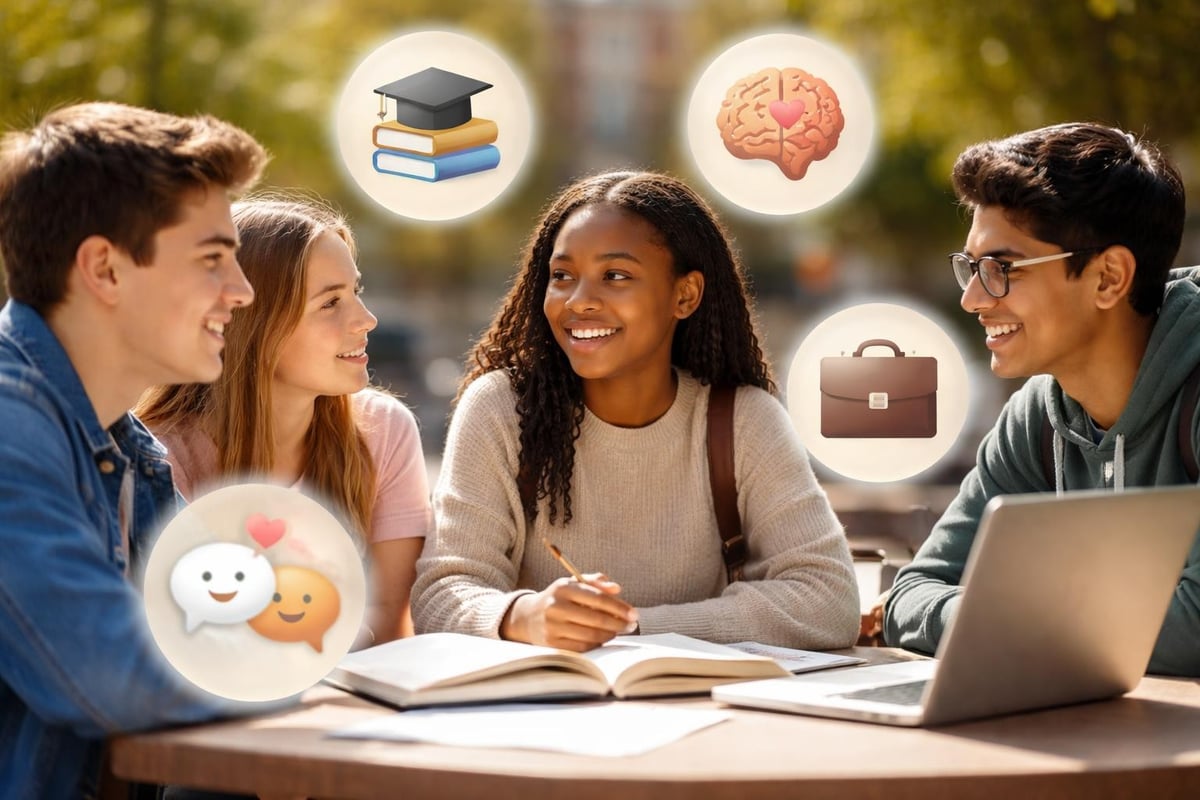
Social competence extends far beyond popularity or having numerous friends. These abilities fundamentally influence academic performance, mental health, and future career prospects.
Research consistently demonstrates that teenagers with strong interpersonal abilities experience lower rates of anxiety and depression while showing higher academic achievement. The capacity to read social cues, manage conflicts constructively, and communicate needs effectively creates a foundation for resilience during the challenging adolescent years.
Key benefits of developed social abilities include:
- Improved emotional regulation and stress management
- Enhanced conflict resolution capabilities
- Stronger support networks during challenging times
- Greater academic collaboration and engagement
- Increased self-awareness and empathy
Many parents, educators, and therapists recognize that traditional education often overlooks these critical life skills. While schools focus predominantly on academic subjects, the confidence social skills pack from specialized resources can fill this crucial gap.
The best books about social skills address specific challenges teenagers face, from handling peer pressure to navigating complex group dynamics. They provide frameworks for understanding both neurotypical and neurodivergent communication patterns, ensuring inclusivity for all learners.
Classic Foundational Texts That Stand the Test of Time
Several timeless works continue to provide valuable insights for teenagers learning to navigate interpersonal relationships effectively.
How to Win Friends and Influence People
Dale Carnegie's seminal work, first published in 1936, remains remarkably relevant for modern teenagers. How to Win Friends and Influence People offers principles that translate seamlessly to contemporary school hallways, digital interactions, and extracurricular activities.
The book emphasizes genuine interest in others, active listening, and making people feel valued. For teenagers accustomed to rapid-fire text exchanges and superficial social media interactions, Carnegie's emphasis on meaningful connection provides a refreshing counterbalance.
Core principles applicable to teen life:
- Remember and use people's names
- Show genuine appreciation without manipulation
- Talk in terms of the other person's interests
- Avoid criticism and condemnation
- Admit mistakes quickly and emphatically
While some language feels dated, the underlying psychology remains sound. Parents can guide discussions about adapting these 1930s examples to modern contexts like group projects, sports teams, or part-time jobs.
Emotional Intelligence: Why It Matters More Than IQ
Daniel Goleman's groundbreaking exploration of emotional intelligence revolutionized our understanding of success factors beyond cognitive ability. For teenagers, this framework proves particularly valuable.
The five components of emotional intelligence-self-awareness, self-regulation, motivation, empathy, and social skills-directly address adolescent developmental challenges. Understanding that emotions can be recognized, named, and managed empowers teens who often feel overwhelmed by intense feelings.
| Emotional Intelligence Component | Teen Application | Practical Benefit |
|---|---|---|
| Self-Awareness | Recognizing triggers for anxiety | Better stress management |
| Self-Regulation | Managing anger constructively | Fewer conflicts and consequences |
| Motivation | Setting personal goals | Increased academic achievement |
| Empathy | Understanding peer perspectives | Stronger friendships |
| Social Skills | Navigating group dynamics | Leadership opportunities |
This framework complements other books on self-improvement by providing measurable competencies to develop rather than vague advice to "be yourself" or "just relax."
Books Specifically Designed for Introverted Teens
Approximately one-third to one-half of teenagers identify as introverted, yet most social skills advice assumes extroverted preferences. The best books about social skills recognize this diversity and provide strategies that honor different temperaments.
Quiet Power: The Secret Strengths of Introverted Kids and Teens
Susan Cain's adaptation of her bestseller specifically targets young readers navigating a world that often rewards extroverted behavior. Quiet Power validates introverted teenagers while providing concrete strategies for success in extrovert-dominated environments like schools and social events.
The book addresses common scenarios introverted teens face: participating in class discussions, handling group projects, attending parties, and managing overstimulation. Rather than trying to transform introverts into extroverts, Cain teaches leveraging natural strengths like deep thinking, careful observation, and meaningful one-on-one connections.
Practical sections include negotiating alone time without seeming antisocial, preparing conversation openers for anxiety-inducing social situations, and communicating needs to extroverted friends or family members who may not understand the need for solitude.
For parents wondering whether their quiet teenager needs intervention, this book clarifies the distinction between introversion (a personality trait) and social anxiety (a clinical concern requiring different approaches). This understanding prevents well-meaning adults from pathologizing normal temperamental variation.

Navigating Teen-Specific Social Challenges
The social dynamics of adolescence differ significantly from both childhood and adult relationships. Books addressing these unique challenges prove most helpful for teenage readers.
Understanding Female Social Hierarchies
Rosalind Wiseman's Queen Bees and Wannabes provides invaluable insights into female adolescent social structures. While initially written for parents, mature teens benefit from understanding the systematic patterns underlying seemingly random social drama.
The book categorizes social roles (Queen Bees, Sidekicks, Floaters, Targets) not to label individuals but to recognize behavioral patterns and power dynamics. This framework helps teenagers understand they're not imagining the complex hierarchies that govern many peer groups.
Common scenarios addressed:
- Handling exclusion from social groups
- Recognizing manipulation tactics
- Responding to gossip and rumors
- Maintaining authenticity within conformity pressure
- Supporting friends experiencing bullying
While focused primarily on girls' experiences, the underlying principles about power, belonging, and identity apply across genders. The book pairs well with resources from Emmadavisbooks.com that help teens develop resilience against peer pressure.
Building Cross-Gender Friendships
Many social skills books focus exclusively on same-gender relationships, leaving teenagers without guidance for navigating cross-gender friendships. The best books about social skills acknowledge that meaningful platonic relationships across gender lines enrich teenage social development.
These friendships provide valuable perspective, reduce stereotyping, and create more inclusive social circles. Books addressing this topic help teens establish boundaries, communicate intentions clearly, and handle others' misperceptions about the nature of their relationships.
Modern Additions Addressing Digital Communication
Social interaction increasingly occurs through digital channels, requiring new competencies beyond traditional face-to-face skills. Contemporary books recognize this reality and provide guidance for online contexts.
Texting, Social Media, and Digital Boundaries
Teenagers today navigate complex decisions about response times, emoji usage, screenshot etiquette, and online persona management. Modern social skills books address these contemporary challenges with practical frameworks.
Key digital competencies include:
- Reading tone in text-based communication without nonverbal cues
- Managing multiple conversation threads across platforms
- Establishing healthy boundaries around availability and response expectations
- Recognizing manipulation in digital contexts
- Balancing online presence with in-person relationship building
Research presented in recent academic work explores how digital tools can actually reduce hesitations in workplace interactions, suggesting thoughtful technology use might benefit rather than hinder social development when approached strategically.
The challenge lies in using digital communication to enhance rather than replace face-to-face interaction. Books providing this balanced perspective help teenagers leverage technology's benefits while avoiding its pitfalls.
Books Addressing Neurodivergent Social Experiences
Approximately 15-20% of teenagers are neurodivergent, including those with autism, ADHD, dyslexia, and other conditions. The best books about social skills include resources specifically addressing these experiences rather than assuming neurotypical communication patterns.
Understanding Different Social Processing Styles
Books for neurodivergent teens often explicitly teach social rules that neurotypical individuals intuitively grasp. This includes decoding facial expressions, understanding implicit social hierarchies, recognizing conversation turn-taking cues, and interpreting figurative language.
| Social Scenario | Neurotypical Approach | Neurodivergent Strategy |
|---|---|---|
| Joining a conversation | Reading body language cues | Waiting for pause, using verbal entry phrase |
| Understanding sarcasm | Automatic tone recognition | Analyzing context and relationship history |
| Small talk initiation | Spontaneous topic selection | Prepared conversation starters |
| Reading interest levels | Interpreting nonverbal signals | Asking direct clarifying questions |
These books validate different processing styles while providing concrete strategies for navigating a world primarily designed around neurotypical communication norms. They emphasize finding authentic connections rather than masking to appear "normal."
Many neurodivergent teenagers report feeling less alone after reading books acknowledging their experiences. This validation alone provides significant mental health benefits, independent of specific skill development.
Practical Application: Moving from Reading to Action
Knowledge without application provides limited value. The most effective social skills books include exercises, reflection prompts, and graduated exposure challenges that move teenagers from passive reading to active skill development.
Creating Personal Growth Plans
Strong books guide readers through self-assessment processes identifying current strengths and priority development areas. This prevents overwhelming teenagers with trying to master everything simultaneously.
Effective progression structure:
- Assess current social comfort zones
- Identify one specific skill to develop
- Learn underlying principles and strategies
- Practice in low-stakes environments
- Gradually increase challenge difficulty
- Reflect on outcomes and adjust approaches
This systematic approach, similar to methodologies in best books on resilience, builds confidence through manageable incremental progress rather than expecting overnight transformation.
Parents and educators can support this process by providing safe practice opportunities, offering constructive feedback, and celebrating small victories. The teen mental health bundle includes complementary resources addressing the emotional dimensions of social skill development.
Choosing the Right Books for Individual Needs
Not every highly-rated book suits every teenager. Effective selection considers individual personality, specific challenges, reading preferences, and developmental readiness.
Matching Books to Personality and Challenges
Extroverted teenagers struggling with listening skills need different resources than introverted teens working on assertiveness. Those dealing with social anxiety require different approaches than teenagers simply seeking to expand friendship circles.
Consider these factors when selecting resources:
- Reading level and style preferences: Some teens prefer narrative approaches with stories and examples, while others want direct instruction with bullet points and worksheets
- Specific vs. general focus: Targeted books addressing particular challenges (public speaking, conflict resolution) versus comprehensive overviews
- Tone and voice: Some teenagers respond to humorous, casual writing while others prefer serious, authoritative approaches
- Interactive elements: Workbooks with exercises versus traditional reading-only formats
- Length and commitment: Short, focused books versus comprehensive guides requiring sustained engagement
The comprehensive review at Social Self offers detailed analysis helping match specific books to individual needs and learning styles.
Age-Appropriate Progression Through Material
Social skills development progresses through adolescence, with different priorities at various stages. The best books about social skills recognize these developmental differences.
Early Adolescence (11-13 years)
Younger teenagers typically benefit from books addressing:
- Understanding changing friendships and social dynamics
- Managing peer pressure and conformity urges
- Developing basic conversation skills
- Handling bullying and exclusion
- Building self-esteem independent of peer approval
These foundational topics establish core competencies for later, more nuanced skill development.
Middle Adolescence (14-16 years)
Mid-teens often focus on:
- Navigating romantic relationships
- Managing complex group dynamics
- Developing leadership abilities
- Handling increased academic collaboration demands
- Balancing multiple social contexts (school, work, activities)
Late Adolescence (17-19 years)
Older teenagers preparing for independence need resources addressing:
- Workplace social dynamics
- Networking and professional relationship building
- Managing roommate and college social situations
- Developing mentoring relationships
- Transitioning friendship patterns through life changes
Parents should consider where their teenager falls developmentally, which may not align precisely with chronological age, when selecting appropriate resources.
Integrating Multiple Resources for Comprehensive Development
Single books rarely address all social skill dimensions. The most effective approach combines multiple resources targeting different competencies and perspectives.
A balanced reading plan might include:
- One foundational text covering general principles
- One specialized book addressing the teen's primary challenge area
- One resource matching their personality type (introvert/extrovert, neurotypical/neurodivergent)
- One modern guide addressing digital communication
- Ongoing access to practical tools and exercises
This multi-resource approach prevents getting stuck in one framework or philosophy while providing comprehensive coverage. The detailed analyses and recommendations available through specialized teen development sites help parents and teens build effective personal libraries.
Supporting Books with Real-World Practice
Reading alone cannot develop social skills-these competencies require real-world application with actual people in genuine situations. The best books about social skills explicitly acknowledge this limitation and provide frameworks supporting practice.
Creating Safe Practice Environments
Teenagers need low-stakes opportunities to try new approaches before facing high-pressure situations. Supportive adults can facilitate:
- Family dinner conversations practicing active listening and turn-taking
- Role-playing scenarios addressing upcoming challenges
- Extracurricular activities providing structured social interaction
- Volunteer opportunities building skills while contributing to communities
- Part-time employment developing workplace social competencies
Books become most valuable when integrated into broader developmental support systems. Parents, educators, and therapists using resources from the managing teen emotions collection can coordinate approaches for maximum effectiveness.
Tracking Progress and Celebrating Growth
Social skill development occurs gradually over months and years rather than days or weeks. Maintaining motivation requires recognizing incremental improvements.
Effective tracking methods include:
- Journaling about social interactions and lessons learned
- Setting specific, measurable goals (initiate three conversations this week)
- Regular check-ins with supportive adults
- Noting situations that previously caused anxiety but now feel manageable
- Celebrating both successes and productive failures that generated learning
This evidence-based approach mirrors strategies in other mind books addressing cognitive and emotional development during adolescence.
Developing strong social abilities during the teenage years creates a foundation for lifelong relationship success, professional achievement, and personal fulfillment. The best books about social skills provide teenagers with frameworks, strategies, and validation as they navigate the complex interpersonal landscape of adolescence. Whether your teen struggles with shyness, conflict management, digital communication boundaries, or simply wants to deepen existing friendships, the right resources can accelerate growth and build confidence. Emmadavisbooks.com offers specialized toolkits and guides designed specifically for teenagers, providing practical strategies and proven techniques that complement these foundational reading materials to support comprehensive social and emotional development throughout the adolescent years.