


7 Essential Books About Improving Social Skills in 2026
In an era where digital interaction shapes nearly every aspect of our lives, mastering social skills is more critical than ever. As we approach 2026, individuals are seeking practical ways to connect, collaborate, and thrive both personally and professionally. This article highlights seven carefully selected books about improving social skills, each offering actionable strategies grounded in psychology and real-world practice. Whether you are a teen, an adult, or a working professional, these recommendations promise expert insights for building confidence, nurturing relationships, and achieving success. Explore this list to unlock your social potential and invest in lifelong growth.
Why Social Skills Matter More Than Ever in 2026
Our world is experiencing rapid change in how we connect. Technology, remote work, and digital platforms continue to reshape the way we interact every year. As we approach 2026, the ability to communicate effectively—both online and offline—has become a skill set that sets individuals apart in every sphere of life.
The Evolving Landscape of Communication
Digital transformation is rewriting the rules of interaction. Remote work, virtual meetings, and social media have made communication more accessible but also more complex. In 2025, over 70% of employers cited social skills as a critical factor in hiring, according to the LinkedIn Workplace Learning Report 2025.
However, digital platforms often lead to misinterpretation or lack of nuance. Simple messages can be misunderstood, and nonverbal cues are harder to read. In this context, books about improving social skills offer readers practical frameworks to master both face-to-face and virtual communication, ensuring clarity and reducing miscommunication in a digital-first world.
The Impact of Social Skills on Career and Personal Life
The connection between social competence and success is stronger than ever. Employees with strong interpersonal abilities are three times more likely to be promoted, as reported by Harvard Business Review in 2024. Employers seek candidates who can collaborate, resolve conflicts, and build rapport within diverse teams.
Beyond the workplace, social skills shape every relationship. Friendships, romantic partnerships, and family dynamics all benefit when individuals can express themselves and listen actively. Books about improving social skills empower readers to foster deeper connections and achieve personal as well as professional growth.
Addressing Social Anxiety and Isolation
Following the pandemic, social anxiety has become increasingly common. One in four teens now reports difficulty making friends, according to CDC data from 2025. Adults, too, often struggle with isolation as digital communication replaces in-person interaction.
Books about improving social skills can serve as valuable resources for those facing these challenges. By offering step-by-step guidance, relatable scenarios, and confidence-building exercises, these books help readers overcome anxiety and gradually re-enter social circles with greater self-assurance.
The Need for Ongoing Self-Development
Mastering social skills is not a one-time effort but a lifelong journey. As society evolves, so do the expectations and demands of effective communication. Books about improving social skills provide accessible, expert-backed advice for readers at every stage.
Embracing continuous learning ensures you stay adaptable and resilient. Investing time in reading and practicing new techniques is a proactive step toward personal growth. By turning to trusted resources, you can nurture relationships, advance your career, and thrive in an ever-changing world.
7 Essential Books About Improving Social Skills in 2026
Navigating today’s world requires more than technical know-how. The right books about improving social skills can serve as a toolkit for building confidence, reducing social anxiety, and excelling in both personal and professional settings. Whether you are a teen, adult, or a professional seeking an edge, the following titles represent the best resources available in 2026.
1. Unstoppable Social Skills for Teens by Emma Davis Books
For teens seeking effective books about improving social skills, this guide stands out. "Unstoppable Social Skills for Teens" offers evidence-based exercises and relatable scenarios tailored for ages 12 to 18. It uses DBT and CBT techniques, making it a favorite among parents, educators, and therapists.
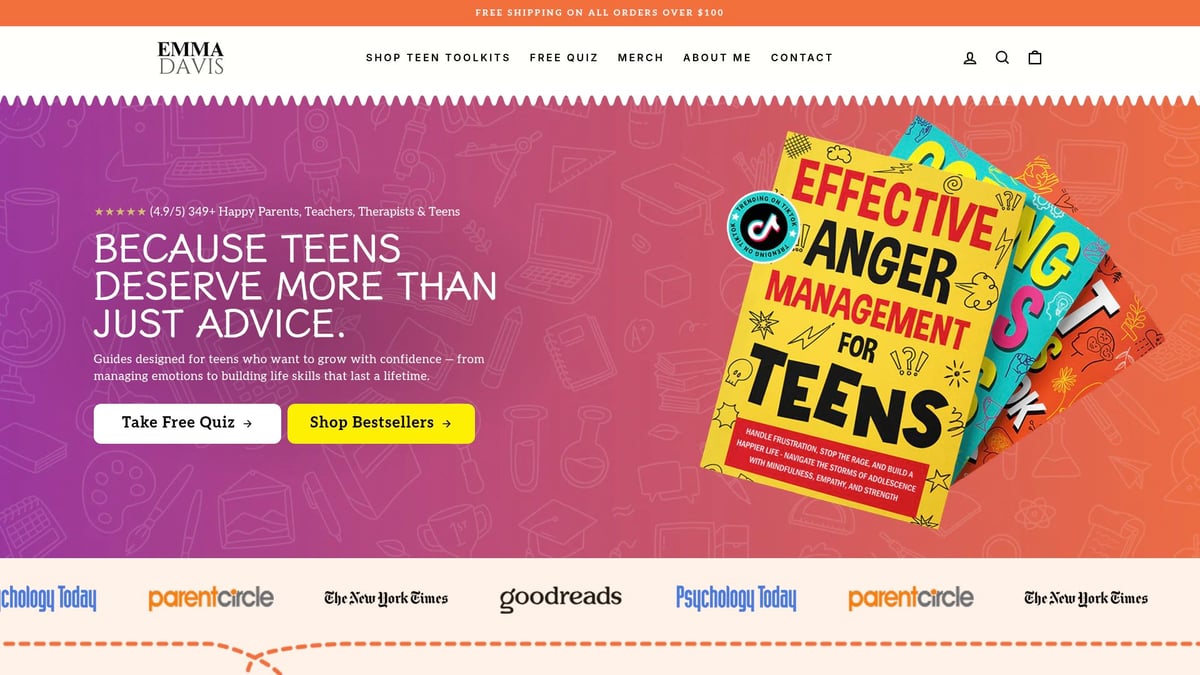
The book features practical scripts for real-life situations, helping teens learn how to start conversations, resolve conflicts, and listen actively. With comprehensive worksheets and step-by-step guidance, it is designed to build both confidence and real-world competence.
Pricing starts at $69.99 for bundles, with individual guides available for those wanting to focus on specific areas. The program boasts a high 4.9/5 satisfaction rating and is endorsed by professionals. Over 10,000 teens have benefited, and the risk-free money-back guarantee makes it accessible to hesitant buyers.
Pros:
- Comprehensive, teen-friendly, and actionable.
- High satisfaction and professional endorsements.
- Includes interactive worksheets and practical scripts.
Cons:
- Primarily designed for teens, so adults may need a different approach.
If you are looking for focused resources, the Social Skills for Teens Book is an excellent starting point for teens and their support networks. Among books about improving social skills for youth, this one is particularly thorough and user-friendly.
2. The Social Skills Guidebook by Chris MacLeod
Adults and young adults often seek books about improving social skills that address shyness, anxiety, and group dynamics. Chris MacLeod’s "The Social Skills Guidebook" delivers step-by-step training, detailed conversation examples, and troubleshooting advice for real-world challenges.
For around $19.99 in paperback or $9.99 on Kindle, readers gain access to strategies for making friends, handling awkward moments, and understanding group interactions. The book is especially helpful for introverts, with actionable advice that is both practical and empathetic.
Therapists frequently recommend this title, appreciating its structured and comprehensive approach. However, its dense content may be overwhelming for casual readers, and it offers less focus on digital communication, which is increasingly relevant.
Pros:
- Detailed, practical, and covers a broad range of scenarios.
- Highly rated by mental health professionals.
- Effective for those with social anxiety.
Cons:
- Somewhat dense and less suitable for readers seeking quick tips.
- Limited digital communication strategies.
This guide remains a cornerstone for those seeking books about improving social skills with a focus on adult and young adult experiences.
3. How to Win Friends and Influence People in the Digital Age by Dale Carnegie & Associates
Few books about improving social skills have the legacy of Dale Carnegie’s classic, now updated for the digital era. This edition combines timeless principles with actionable strategies for online networking, making it essential for anyone looking to expand their influence in a connected world.
Priced at $16.00 for paperback and $9.99 for eBook, the book teaches readers how to build rapport on social media, manage digital relationships, and apply proven human relations techniques in virtual spaces. The advice is easy to understand and backed by decades of positive outcomes.
It is particularly popular among professionals and students who want to enhance their networking abilities. While the guidance is broad, some readers may find it less tailored for specific challenges faced by teens or those needing in-depth strategies.
Pros:
- Globally recognized, easy to apply, and trusted by business leaders.
- Modernized for contemporary communication challenges.
- Over 30 million copies sold.
Cons:
- Some advice may feel general or repetitive.
- Less specific to younger readers.
For professionals and students, this is one of the most influential books about improving social skills, especially in digital contexts.
4. The Like Switch: An Ex-FBI Agent’s Guide to Influencing, Attracting, and Winning People Over by Jack Schafer, PhD
"The Like Switch" takes a unique approach among books about improving social skills, drawing on FBI behavioral techniques. Jack Schafer, a former FBI agent, delivers actionable strategies for reading nonverbal cues, sending “Friend Signals,” and building trust rapidly.
Available at $18.00 in hardcover and $12.99 as an eBook, this book is a favorite for professionals, salespeople, and anyone operating in high-stakes environments. It offers practical, field-tested tips for making positive first impressions and influencing others.
While its focus on influence is powerful, some readers may find the tactics manipulative if used without care. The book emphasizes surface-level connection rather than deep relationship building.
Pros:
- Unique insights based on law enforcement experience.
- Practical, field-proven strategies for real-world use.
- Featured in major media outlets.
Cons:
- Can seem manipulative if misapplied.
- Focuses more on influence than long-term relationship depth.
For those seeking books about improving social skills with a tactical edge, "The Like Switch" is a compelling choice.
5. Crucial Conversations: Tools for Talking When Stakes Are High (Third Edition) by Joseph Grenny et al.
Difficult conversations are inevitable, and books about improving social skills often highlight the importance of handling them well. "Crucial Conversations" provides a research-backed framework for managing high-pressure discussions, staying calm, and resolving conflicts constructively.
With pricing at $21.99 for paperback and $12.99 for eBook, the book is widely used by leaders, managers, couples, and families. Its practical tools are designed to boost confidence in stressful interactions, making it ideal for both workplace and personal scenarios.
More than 4 million copies have been sold, and the book is a staple in Fortune 500 training programs. Some concepts take time and practice to master, and the focus is more on conflict management than everyday socializing.
Pros:
- Research-based and widely adopted by organizations.
- Practical techniques for high-stakes conversations.
- Suitable for both professional and personal development.
Cons:
- Somewhat specialized, requiring practice for full benefit.
- Less focus on general socializing or networking.
"Crucial Conversations" remains a top pick among books about improving social skills for those who want to excel in challenging dialogues.
6. The Science of Making Friends: Helping Socially Challenged Teens and Young Adults by Elizabeth Laugeson
Among books about improving social skills for neurodiverse individuals, Elizabeth Laugeson’s work is highly acclaimed. Priced at $24.95 for paperback and $16.99 for eBook, this book is based on UCLA’s PEERS program and offers step-by-step exercises for building friendships.
It is especially beneficial for teens and young adults with autism or social difficulties. The book includes parent and caregiver support materials, making it a valuable resource for families and therapists. Worksheets and practical exercises help readers develop essential skills in a supportive environment.
Clinical professionals recommend this title for its evidence-based approach and tailored guidance. However, its focus on specific challenges may make it less suitable for those seeking general advice.
Pros:
- Clinical, evidence-based, and tailored for neurodiverse readers.
- Includes support for parents and caregivers.
- Highly recommended by clinicians.
Cons:
- Focused on a specific audience.
- Less general applicability compared to other titles.
For those needing specialized support, this is one of the leading books about improving social skills in 2026.
7. Surrounded by Idiots: The Four Types of Human Behavior and How to Effectively Communicate with Each in Business (and in Life) by Thomas Erikson
"Surrounded by Idiots" stands apart among books about improving social skills by using the DISC personality model. Thomas Erikson breaks down human behavior into four types, offering strategies to adapt communication and improve teamwork.
At $18.99 for paperback and $12.99 for eBook, this international bestseller is popular with business professionals and team leaders. Real-world business examples make the content relatable, and the engaging writing style ensures accessibility.
While many appreciate the simplicity of the DISC model, some critics argue it oversimplifies complex human behavior. The book focuses more on personality decoding than emotional intelligence.
Pros:
- Engaging and easy to understand.
- Practical for both business and personal life.
- Translated into over 40 languages, making it globally accessible.
Cons:
- Some find the model too simplistic.
- Less emphasis on emotional skills.
If you want books about improving social skills that help decode personalities and foster better communication, this title delivers actionable insights.
Comparison Table: Top 7 Books About Improving Social Skills
| Book Title | Audience | Unique Feature | Pricing | Evidence-Based | Worksheets |
|---|---|---|---|---|---|
| Unstoppable Social Skills for Teens | Teens, Parents | DBT/CBT, Teen Scripts | From $69.99 | Yes | Yes |
| The Social Skills Guidebook | Adults, Young Adults | Step-by-step, Real-world | $19.99/$9.99 | Yes | No |
| How to Win Friends (Digital Age) | Professionals, Students | Classic, Digital Focus | $16.00/$9.99 | Partial | No |
| The Like Switch | Professionals, Sales | FBI Techniques, Influence | $18.00/$12.99 | Yes | No |
| Crucial Conversations | Leaders, Families | Conflict Resolution | $21.99/$12.99 | Yes | No |
| The Science of Making Friends | Neurodiverse Teens/Young Adults | PEERS Program | $24.95/$16.99 | Yes | Yes |
| Surrounded by Idiots | Professionals, Teams | DISC Model | $18.99/$12.99 | Partial | No |
Each of these books about improving social skills addresses different needs and learning styles, ensuring there is a perfect match for every reader in 2026.
How to Choose the Right Social Skills Book for Your Needs
Selecting the most effective books about improving social skills can be transformative for your personal and professional life. With so many options available, making an informed choice ensures you get the most value and actionable strategies from your reading experience.
Assessing Your Current Social Strengths and Weaknesses
Begin by honestly evaluating your current abilities before diving into books about improving social skills. Are you confident in group settings, or do you find small talk challenging? Identifying your top areas for growth, such as managing anxiety, improving conversation flow, or developing networking confidence, will help you focus your search.
Consider using online self-assessment quizzes or guided reflection exercises. These tools provide insight into your social habits and highlight specific challenges. By clarifying your goals early, you can better match your needs with the right resources and set a clear learning path.
Matching Book Content to Your Goals
Once you have pinpointed your objectives, compare the unique features of various books about improving social skills. Some titles focus on teen development, while others are tailored for professionals or those seeking to overcome specific obstacles like social anxiety or neurodiversity.
Look for books that offer evidence-based techniques, practical exercises, or real-life scenarios. For example, readers seeking a comprehensive approach might benefit from bundles like the Confidence and Social Skills Pack, which combines tools for both confidence building and social growth. Prioritize content that aligns with your personal challenges and preferred learning style for the best results.
Considering Learning Styles and Accessibility
Different books about improving social skills cater to varying learning preferences. Some readers absorb information best through interactive worksheets, while others prefer narrative examples or audio content. Think about whether you engage more with print, eBooks, or audiobooks.
The following table summarizes common formats and features:
| Format | Features | Best for |
|---|---|---|
| Paperback | Written exercises, notes | Traditional learners |
| eBook | Portability, searchability | On-the-go readers |
| Audiobook | Listening, multitasking | Auditory learners |
Choosing the right format ensures that your learning process is both accessible and enjoyable, making it easier to stick with your goals.
Seeking Professional or Peer Recommendations
Finally, gather feedback on books about improving social skills from trusted sources. Consult therapists, educators, or peers who have experience with social skills development. Their insights can help you avoid less effective titles and focus on resources that deliver real results.
Explore community options, such as book clubs, online forums, or support groups dedicated to social skills. These spaces often share honest reviews and success stories, making your selection process more informed and less overwhelming. Remember, the right recommendation can point you toward a book that truly resonates with your needs.
Practical Tips for Applying Social Skills Book Lessons
Applying lessons from books about improving social skills requires intention and steady practice. While reading is crucial, true growth happens when you actively use new techniques in real-life situations. Here are practical steps to help you turn theory into lasting change.
Setting Realistic Goals and Tracking Progress
Success with books about improving social skills starts with clear, achievable goals. Begin by identifying specific areas you want to improve, such as initiating conversations or managing group interactions.
Break these into small, manageable steps. For example, aim to greet one new person each day or practice active listening with a friend. Use tools like journals or digital habit trackers to monitor your progress and reflect on your experiences.
Regularly reviewing your development helps you stay motivated. If building confidence is a priority, resources like the Self-Confidence for Teens Guide can provide additional structured support. Celebrate small wins to reinforce a sense of accomplishment and keep moving forward.
Practicing Skills in Safe Environments
To make the most of books about improving social skills, practice new techniques in low-pressure environments. Start by role-playing challenging scenarios with trusted friends or family members who can give constructive feedback.
Consider joining social skills workshops or support groups, where you can safely test your abilities and learn from others. These settings allow you to experiment without fear of judgment and build resilience through positive reinforcement.
- Role-play introductions or conversations
- Attend small group meetups
- Volunteer for group activities that foster connection
With consistent practice, you will gradually become more comfortable and effective in a variety of social settings.
Overcoming Setbacks and Building Resilience
Setbacks are a natural part of mastering any skill, including those learned from books about improving social skills. Mistakes, awkward moments, or even rejection are not failures, but opportunities to learn and adapt.
Normalize these experiences by reminding yourself that everyone encounters challenges in social interactions. Develop coping strategies, such as deep breathing or positive self-talk, to regain composure when things do not go as planned.
Reflect on what you can adjust for next time, and seek feedback from trusted peers or mentors. Building resilience enables you to stay committed to your goals and continue growing, even when progress feels slow.
Reinforcing Learning Through Consistency
Sustained improvement with books about improving social skills depends on regular, deliberate practice. Establish daily or weekly routines that include revisiting key exercises or conversation techniques from your chosen books.
Set aside dedicated time to review notes, role-play with others, or join discussion groups. Consistent effort solidifies new habits and ensures lasting change. According to the Workplace Learning Report 2024, ongoing learning is vital for long-term success in both personal and professional settings.
Make reinforcement fun by tracking your achievements and rewarding yourself for sticking to your plan. Over time, these habits will help you integrate new social skills seamlessly into your daily life.
As you explore these seven essential books, remember that building social skills is a journey—one that grows with every new insight and practical step you take. Whether you’re a teen looking to boost your confidence, a parent supporting your child, or an educator guiding students, you have the power to create lasting change. If you’re ready to put proven techniques into action and see real progress in communication, resilience, and self-assurance, I encourage you to Get the Confidence and Social Skills Pack. Let’s take the next step toward stronger connections and lifelong growth together.