


Books on Control: Essential Reading for Teen Empowerment
Understanding control during the teenage years represents one of the most critical developmental challenges young people face. The ability to regulate emotions, manage impulses, and navigate complex social situations determines much of adolescent success and well-being. Books on control offer teenagers practical frameworks for developing these essential capabilities, providing research-backed strategies that translate psychological principles into actionable techniques. These resources serve as powerful tools for teens seeking to build confidence, strengthen emotional resilience, and create positive life outcomes during a transformative developmental period.
Why Control Matters During Adolescence
Teenage brains undergo significant neurological development, particularly in regions responsible for executive function and impulse regulation. This biological reality creates unique challenges for adolescent self-management.
During these formative years, teens encounter unprecedented demands on their self-control abilities. Academic pressures intensify, social dynamics grow increasingly complex, and emotional experiences become more intense. Research on perceived control demonstrates that how teenagers view their ability to influence outcomes directly impacts their mental health, academic performance, and relationship quality.
Books on control provide several critical benefits for teenage readers:
- Evidence-based strategies for managing overwhelming emotions
- Practical techniques for improving decision-making under pressure
- Frameworks for understanding the difference between controllable and uncontrollable factors
- Tools for building self-efficacy and personal agency
- Methods for developing healthy responses to stress and uncertainty
The psychological concept of control in psychology encompasses multiple dimensions, including self-efficacy, locus of control, and perceived autonomy. Teens who develop strong control competencies demonstrate better academic outcomes, healthier relationships, and greater emotional well-being.

Categories of Control Books for Teenagers
Emotional Control and Regulation
Books focused on emotional control teach teenagers how to recognize, understand, and manage their feelings effectively. These resources address common adolescent challenges like anxiety, anger, frustration, and overwhelming stress.
Quality emotional control literature typically includes exercises for identifying emotional triggers, techniques for regulating physiological responses, and strategies for expressing feelings appropriately. Many incorporate cognitive-behavioral approaches that help teens recognize thought patterns contributing to emotional dysregulation.
Resources on controlling emotions specifically designed for teenagers use age-appropriate language and scenarios that resonate with adolescent experiences. These books often feature real-life examples involving school stress, friendship conflicts, family dynamics, and romantic relationships.
| Emotional Control Focus | Key Skills Developed | Primary Benefit |
|---|---|---|
| Anger Management | Impulse regulation, de-escalation techniques | Healthier conflict resolution |
| Anxiety Reduction | Breathing exercises, cognitive restructuring | Decreased worry and fear |
| Stress Management | Prioritization, boundary-setting | Improved well-being |
| Mood Regulation | Emotional awareness, coping strategies | Emotional stability |
Behavioral Control and Impulse Management
Books on control addressing behavioral aspects help teenagers develop the capacity to pause before acting, consider consequences, and make deliberate choices rather than reactive decisions.
These resources prove particularly valuable for teens struggling with procrastination, distraction, addiction to technology, or risky behaviors. They typically incorporate habit-formation science, willpower research, and practical systems for creating supportive environments.
Effective behavioral control books teach teenagers about delayed gratification, the neuroscience behind impulse control, and concrete techniques for strengthening self-discipline. Many include structured exercises, reflection prompts, and accountability frameworks that transform abstract concepts into daily practices.
Cognitive Control and Mental Clarity
Cognitive control literature focuses on how teenagers can manage their attention, thoughts, and mental processes more effectively. This category addresses executive function skills critical for academic success and personal development.
Core topics in cognitive control books include:
- Focus and concentration techniques
- Memory enhancement strategies
- Critical thinking development
- Metacognitive awareness
- Mental flexibility and adaptability
Understanding the psychology of control helps teenagers recognize that mental control isn't about suppressing thoughts but rather about directing attention purposefully and managing cognitive resources effectively.
Essential Elements of Effective Control Books
Age-Appropriate Content and Language
Books on control designed for teenage audiences must speak directly to adolescent experiences without condescension. The most effective resources acknowledge the genuine challenges teens face while respecting their growing autonomy and intelligence.
Quality teen control literature uses contemporary examples, addresses technology-related challenges, and incorporates cultural contexts relevant to modern adolescence. These books avoid overly clinical language while maintaining scientific accuracy and evidence-based recommendations.
The balance between accessibility and depth determines whether teenagers will actually engage with control concepts. Books that present complex psychological principles through relatable narratives, practical exercises, and visual elements tend to achieve better outcomes than purely theoretical approaches.
Research-Based Strategies
Credible books on control ground their recommendations in psychological research and established therapeutic approaches. Teenagers benefit most from resources that explain the science behind control strategies while providing clear implementation guidance.
Evidence-based approaches might include cognitive-behavioral techniques, mindfulness practices, acceptance and commitment therapy principles, or dialectical behavior therapy skills. The best resources cite research while translating academic findings into teenager-friendly language and actionable steps.
Parents, educators, and therapists seeking books on self-improvement for teens should prioritize resources authored by qualified psychologists, counselors, or researchers specializing in adolescent development.
Interactive Components and Practical Exercises
Passive reading rarely produces lasting behavior change. Effective control books for teenagers incorporate interactive elements that transform knowledge into practice.
Valuable interactive components include:
- Self-assessment questionnaires that help teens identify specific control challenges
- Journaling prompts that encourage reflection on personal experiences
- Step-by-step exercises for practicing new techniques
- Progress tracking tools that build motivation through visible improvement
- Scenario-based practice problems that develop decision-making skills
These practical elements bridge the gap between understanding control concepts intellectually and developing genuine competency. Teenagers who actively engage with exercises demonstrate significantly better retention and application of control strategies.
Selecting the Right Control Books for Different Needs
Books for Academic Performance Enhancement
Some books on control specifically target academic challenges, helping teenagers develop study habits, manage test anxiety, and improve concentration during learning activities.
These resources teach time management, organization systems, distraction management, and effective study techniques. They address common adolescent academic struggles like procrastination, perfectionism, and performance anxiety through control-building frameworks.
Students experiencing academic stress benefit from books that combine metacognitive strategies with emotional regulation techniques. Understanding how to control both cognitive processes and emotional responses to academic challenges creates comprehensive support for educational success.
Resources for Social and Relationship Control
Interpersonal control represents a delicate balance between asserting personal boundaries and respecting others' autonomy. Books addressing social control help teenagers navigate peer pressure, communicate effectively, and maintain healthy relationships.
Quality resources in this category teach assertiveness skills, conflict resolution strategies, and techniques for managing social anxiety. They help teens understand the difference between healthy influence and manipulation, between appropriate boundaries and controlling behaviors.
Teenagers developing social skills through control-focused reading learn to regulate emotional reactions during social interactions, think before responding in conversations, and maintain composure during disagreements.
Books Addressing Mental Health Challenges
For teenagers struggling with anxiety disorders, depression, ADHD, or other mental health conditions, specialized books on control offer targeted strategies for managing symptoms and improving daily functioning.
These resources acknowledge that mental health challenges can impact control abilities while providing adapted techniques that accommodate different neurological profiles. They often incorporate professional treatment approaches in self-help formats, though they should complement rather than replace professional care when needed.
| Mental Health Focus | Control Challenge Addressed | Recommended Approach |
|---|---|---|
| Anxiety Disorders | Worry spirals, panic responses | Exposure techniques, cognitive restructuring |
| Depression | Motivation, negative thought patterns | Behavioral activation, thought monitoring |
| ADHD | Attention, impulse control | Environmental structuring, mindfulness |
| Eating Disorders | Compulsive behaviors, body image | Acceptance strategies, urge surfing |

Implementing Control Principles from Books
Creating a Personal Control Development Plan
Reading books on control provides knowledge, but systematic implementation produces results. Teenagers benefit from developing personalized plans that identify specific control goals and outline practical steps for achievement.
An effective control development plan includes baseline self-assessment, clearly defined objectives, selected strategies from reading, practice schedules, and progress evaluation methods. This structured approach transforms general control concepts into customized development pathways.
Parents and educators can support this process by helping teens select appropriate books, facilitating discussion about key concepts, and providing accountability for practice commitments. The confidence and social skills resources available for teens often include planning frameworks alongside skill-building content.
Building Sustainable Control Habits
Control capabilities develop through consistent practice rather than one-time efforts. Books that teach habit formation alongside specific control techniques help teenagers create lasting change.
Key principles for sustainable control development:
- Start with small, manageable changes rather than overwhelming transformations
- Practice new techniques during low-stress situations before applying them to high-pressure scenarios
- Track progress to maintain motivation and identify patterns
- Adjust strategies based on what works for individual temperament and circumstances
- Celebrate incremental improvements rather than expecting perfection
Understanding the psychology of what individuals can and cannot control helps teenagers focus their efforts productively. Books that clarify this distinction prevent frustration and support realistic goal-setting.
Integrating Multiple Control Dimensions
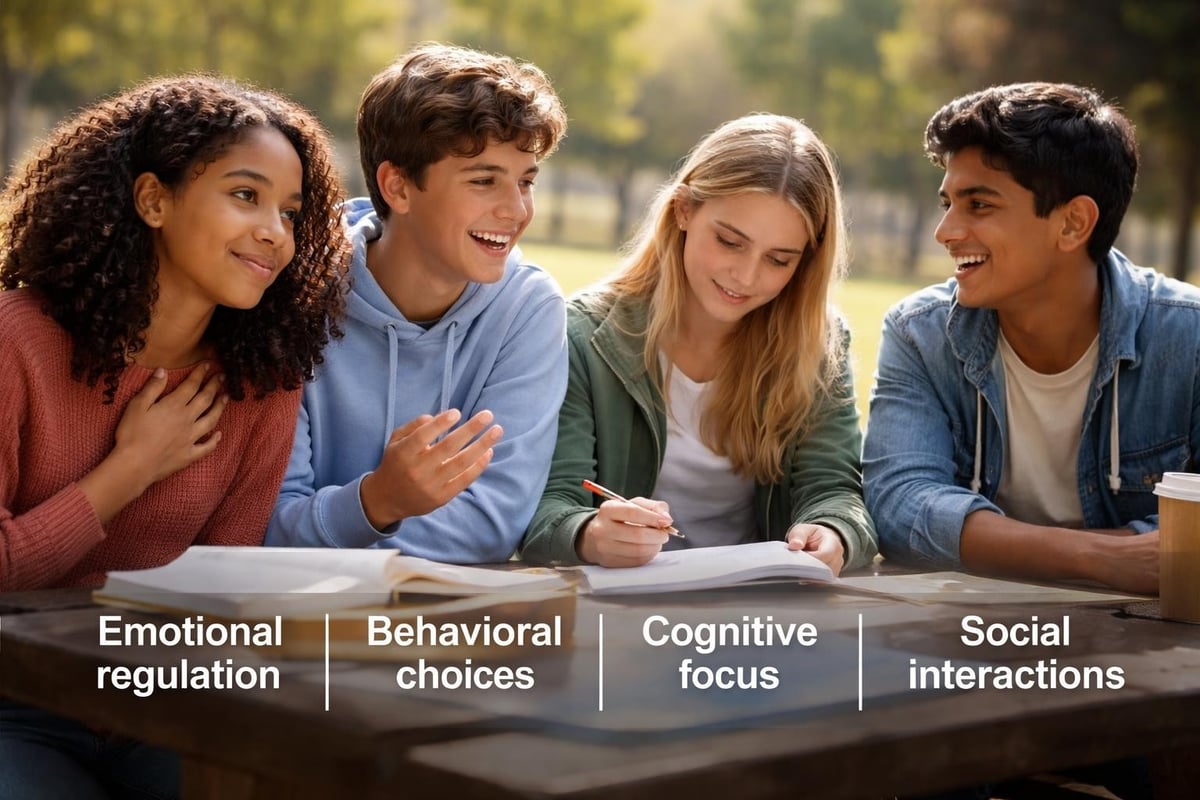
Comprehensive control development addresses emotional, behavioral, cognitive, and social dimensions simultaneously. While teenagers might initially focus on one area of particular struggle, the most effective approaches recognize interconnections between different control aspects.
For example, improving emotional regulation often enhances behavioral control, as teenagers who manage feelings effectively make better decisions. Similarly, strengthening cognitive control through improved focus supports emotional regulation by reducing overwhelm and building confidence.
Books on control that present integrated frameworks help teenagers understand these connections and develop balanced competencies across multiple domains. Resources on building resilience frequently incorporate multiple control dimensions within unified development approaches.
The Role of Adults in Supporting Teen Control Development
Parents as Control Development Partners
Parents play crucial roles in supporting teenage control development without micromanaging or undermining adolescent autonomy. Providing appropriate books, creating supportive environments, and modeling healthy control behaviors all contribute positively.
Effective parental support involves discussing book concepts with teens, helping them identify real-world application opportunities, and offering encouragement during setbacks. Parents should avoid using control book principles to criticize teen behavior, instead focusing on collaborative problem-solving.
Creating household structures that support control development includes establishing reasonable routines, minimizing unnecessary temptations, and respecting growing independence while maintaining appropriate boundaries. These environmental factors significantly influence whether teenagers can successfully implement strategies from books on control.
Educators and Therapeutic Applications
Schools and therapeutic settings increasingly incorporate control-focused reading into programming for adolescents. Educators use these resources to support social-emotional learning initiatives, while therapists assign specific books as bibliotherapy interventions.
Group discussions around control book concepts create opportunities for peer learning and normalize adolescent struggles. Teenagers often benefit from discovering that others experience similar challenges and from sharing strategies that work in different situations.
Mental health professionals should carefully select books on control that align with therapeutic goals and client developmental levels. Resources addressing emotional regulation work particularly well as adjuncts to counseling for adolescents developing coping skills.
Evaluating Control Book Quality and Credibility
Author Credentials and Expertise
Not all books on control offer equally valuable guidance. Evaluating author credentials helps identify resources grounded in legitimate expertise rather than unsubstantiated opinion.
Credible authors typically hold advanced degrees in psychology, counseling, social work, or related fields, possess specialized training in adolescent development, and demonstrate practical experience working with teenagers. Published research, professional licensure, and institutional affiliations indicate expertise worth trusting.
Teenagers and adults selecting control books should investigate author backgrounds, read multiple reviews from credible sources, and preview content when possible. Resources recommended by school counselors, therapists, or reputable organizations generally meet higher quality standards.
Evidence Base and Scientific Support
Quality books on control reference psychological research supporting their recommendations. While teenagers don't need dense academic citations, some indication that strategies rest on scientific foundations rather than personal opinion adds credibility.
Books incorporating concepts like cognitive-behavioral therapy, mindfulness-based stress reduction, or dialectical behavior therapy draw from extensively researched therapeutic approaches. These evidence-based frameworks demonstrate effectiveness across diverse populations and conditions.
Skepticism toward resources making unrealistic promises or claiming universal solutions serves teenagers well. Control development requires sustained effort and individualized approaches rather than quick fixes or one-size-fits-all formulas.
Practical Usability and Engagement
Even scientifically sound books fail if teenagers won't read or use them. Evaluating practical usability includes considering reading level appropriateness, visual design, exercise quality, and overall engagement potential.
Indicators of high usability:
- Clear organization with logical chapter progression
- Engaging writing style that respects teen intelligence
- Realistic examples reflecting contemporary adolescent life
- Varied formats including text, graphics, and interactive elements
- Reasonable length that doesn't overwhelm busy teenagers
Reviews from actual teenage readers provide valuable insights into engagement levels. Resources that teens describe as helpful, relatable, and practical demonstrate superior usability compared to those deemed boring, condescending, or irrelevant.
Complementary Resources and Ongoing Development
Digital Tools and Control Apps
Books on control often work well alongside digital applications designed to support self-regulation, habit formation, and emotional management. Technology-native teenagers may particularly benefit from multi-modal approaches combining traditional reading with interactive digital tools.
Quality apps complement book learning by providing practice reminders, progress tracking, real-time support during challenging moments, and gamified engagement elements. However, app selection requires careful evaluation, as many lack evidence bases or appropriate privacy protections.
Balancing technology use represents its own control challenge for teenagers. Resources addressing digital wellness and technology boundaries help teens develop healthy relationships with devices while leveraging beneficial applications.
Community Support and Accountability
Control development accelerates when teenagers connect with others pursuing similar goals. Book clubs, peer support groups, or structured programs create communities that normalize struggles and celebrate progress.
Parents might facilitate small groups where teens discuss control book concepts together, or schools might incorporate these resources into advisory periods or social-emotional learning curricula. Sharing experiences and strategies builds motivation while reducing the isolation many teenagers feel regarding their challenges.
Online communities focused on teen self-improvement can provide support, though adult oversight ensures safety and appropriate guidance. Structured programs offer more reliable accountability than informal online groups.
Continual Learning and Skill Refinement
Control development represents an ongoing journey rather than a destination. As teenagers mature, encounter new challenges, and develop deeper self-awareness, their control needs evolve.
Returning to books on control at different developmental stages often reveals new insights and applications. Techniques that seemed irrelevant or too difficult initially may become valuable tools as circumstances change. Building personal libraries of control resources supports this continuous development process.
Advanced readers might eventually explore more sophisticated texts originally written for adults, gradually deepening their understanding of psychological principles underlying control competencies. This progression from teen-focused resources to more complex materials reflects growing maturity and expertise.
Books on control provide teenagers with essential frameworks for navigating adolescence successfully, offering evidence-based strategies for emotional regulation, behavioral management, and cognitive mastery. These resources transform abstract psychological concepts into practical tools that build confidence, resilience, and life skills during critical developmental years. Emmadavisbooks.com specializes in creating comprehensive guides and toolkits designed specifically for teenagers developing these crucial control competencies, offering professionally developed resources that parents, educators, and therapists trust to support adolescent growth and empowerment.