


Books on Pressure: Essential Guides for Teens in 2026
Teenagers today face unprecedented levels of pressure from multiple directions: academic expectations, social media comparisons, extracurricular commitments, and the weight of future planning. Books on pressure offer powerful tools for young people to understand, manage, and even harness these challenges. Whether navigating exam stress, peer relationships, or performance anxiety, the right reading material can transform overwhelming feelings into manageable experiences. This guide explores the most valuable resources available to help teens develop resilience and confidence when facing high-stakes situations.
Understanding Why Teens Need Books on Pressure
Adolescence has always been a challenging developmental period, but 2026 brings unique stressors that previous generations never encountered. Social media creates constant comparison cycles, college admissions have become increasingly competitive, and global uncertainty adds another layer of anxiety to everyday life.
The Modern Teen Pressure Landscape
Research consistently shows that today's teenagers report higher stress levels than adults in similar situations. This phenomenon stems from several interconnected factors:
- Academic intensity: Advanced placement courses, standardized testing, and competitive college applications create sustained pressure starting as early as middle school
- Digital connectivity: The expectation of constant availability and curated online personas generates perpetual social pressure
- Future uncertainty: Economic instability and rapid technological change make career planning more stressful than ever
- Performance culture: From sports to arts to academics, teens face pressure to excel in multiple domains simultaneously
Books on pressure specifically designed for young readers address these challenges with age-appropriate strategies and relatable examples. Unlike generic stress management resources, teen-focused materials acknowledge the unique circumstances of adolescence while providing actionable techniques.

How Reading About Pressure Builds Resilience
The act of reading about pressure serves multiple therapeutic and educational purposes. When teens see their experiences reflected in books, they realize they're not alone in their struggles. This normalization reduces shame and opens pathways to seeking help when needed.
Books also provide distance from immediate stressors, allowing young people to analyze situations more objectively. A teenager overwhelmed by exam anxiety might recognize patterns in their thinking when reading about similar experiences, creating opportunities for cognitive restructuring. Understanding performing under pressure through research-backed strategies helps teens develop mental frameworks they can apply across different situations.
Types of Books on Pressure for Different Teen Needs
Not all pressure-related reading material serves the same purpose. Effective resources vary based on the specific challenges a teenager faces and their preferred learning style.
Science-Based Pressure Management Guides
These books ground their advice in psychological research and neuroscience, appealing to teens who want to understand the "why" behind their stress responses. They typically include:
- Explanations of how the stress response evolved and why it activates in modern situations
- Practical exercises based on cognitive-behavioral therapy principles
- Case studies demonstrating how techniques work in real-world scenarios
- Self-assessment tools to identify personal pressure triggers
Resources like The Power of Pressure examine how pressure can become a positive force through insights from biology and neuroscience, helping teens reframe their relationship with stress entirely.
Narrative and Fiction Approaches
Some teenagers connect more deeply with stories than instruction manuals. Fiction that explores pressure themes allows young readers to process their own experiences through character identification. Works like Girls Under Pressure address specific issues such as body image pressures that resonate particularly with teenage girls, while adventure-based narratives demonstrate pressure management through action.
| Book Type | Best For | Key Benefits | Typical Length |
|---|---|---|---|
| Science-Based Guides | Analytical thinkers | Evidence-backed strategies | 200-300 pages |
| Personal Narratives | Emotional processors | Relatable experiences | 150-250 pages |
| Workbooks | Action-oriented learners | Interactive exercises | 100-200 pages |
| Fiction | Reluctant advice-seekers | Indirect learning through story | 200-400 pages |
Specialized Pressure Topics
Different teens face different pressure sources. Some books on pressure focus narrowly on specific challenges:
Academic Pressure Resources tackle test anxiety, study stress, and performance expectations in educational settings. These guides often include time management strategies, memory techniques, and reframing methods for exam situations.
Social Pressure Materials address peer relationships, friendship dynamics, dating pressures, and social media anxiety. They help teens develop boundary-setting skills and authentic self-expression despite external expectations.
Performance Pressure Books support young athletes, musicians, actors, and other teens in competitive pursuits. These resources often draw from sports psychology and include visualization techniques, pre-performance routines, and recovery strategies.
The resources available at Emmadavisbooks.com include comprehensive guides addressing multiple pressure domains simultaneously, recognizing that teens rarely face isolated stressors.
Essential Strategies Found in Quality Pressure Books
The most effective books on pressure share common elements that distinguish them from generic self-help materials. Understanding these core components helps parents, educators, and teens themselves select truly valuable resources.
Cognitive Reframing Techniques
Books that teach cognitive reframing help teens recognize and challenge unhelpful thought patterns. Instead of viewing an upcoming presentation as a threat, reframing strategies help young people see it as an opportunity to share knowledge or develop skills.
These techniques typically include:
- Identifying automatic thoughts: Recognizing the immediate mental response to pressure situations
- Examining evidence: Objectively evaluating whether thoughts are accurate or exaggerated
- Generating alternatives: Creating more balanced, realistic interpretations
- Testing predictions: Conducting behavioral experiments to challenge catastrophic thinking
- Reinforcing new patterns: Practicing alternative thoughts until they become automatic
Resources focused on managing teen emotions and mental health incorporate these cognitive strategies within age-appropriate frameworks that acknowledge teenage brain development.
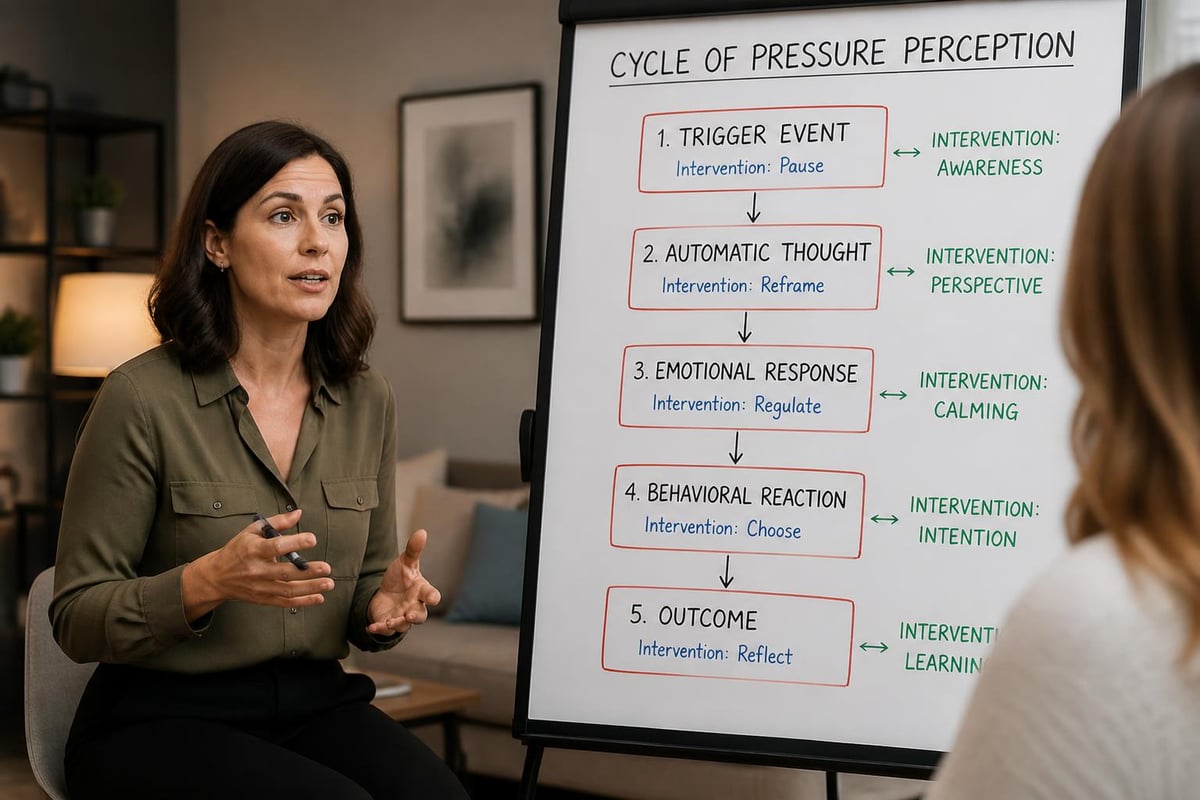
Physiological Regulation Methods
Books on pressure increasingly recognize the mind-body connection, teaching teens to manage physical stress responses. When the body's fight-or-flight system activates during a math test or social situation, physical interventions can interrupt the cascade.
Breathing techniques form the foundation of physiological regulation. Square breathing, extended exhale patterns, and resonance frequency breathing all activate the parasympathetic nervous system, counteracting stress arousal. The beauty of breathing exercises lies in their portability; teens can use them anywhere without drawing attention.
Progressive muscle relaxation helps young people recognize and release physical tension they may not even notice carrying. By systematically tensing and releasing muscle groups, teens develop body awareness that serves them in pressure situations.
Movement-based strategies acknowledge that teenagers have energy that needs productive outlets. Books covering these approaches might discuss how brief exercise, stretching, or even fidget strategies can manage pressure-induced restlessness.
Building Pressure Immunity Through Exposure
Counter-intuitively, some of the best books on pressure teach teens to seek controlled exposure to stressful situations rather than avoid them. This approach, rooted in exposure therapy principles, helps young people build confidence through successful experiences.
The key lies in creating a graduated hierarchy of challenges. A teen with social anxiety might start by making eye contact with a cashier, progress to asking a question in class, and eventually work toward giving presentations. Each successful experience builds evidence against catastrophic predictions and strengthens coping capacity.
Quality pressure books provide frameworks for creating these exposure hierarchies safely, ensuring teens neither overwhelm themselves nor avoid growth entirely. They emphasize the importance of celebrating small victories and maintaining self-compassion through setbacks.
Selecting the Right Books on Pressure for Individual Teens
Not every highly-rated pressure management book will resonate with every teenager. Personal learning styles, specific challenges, reading preferences, and developmental stages all influence which resources prove most helpful.
Matching Content to Reading Level and Interest
A brilliant resource loses its value if a teen won't actually read it. Consider these factors when selecting books:
- Reading level: Advanced readers may find simplified content patronizing, while struggling readers need accessible language regardless of content sophistication
- Format preferences: Some teens prefer workbook-style interaction, others want straight narrative, and many appreciate a blend
- Length: Shorter books often see higher completion rates, but some deep-dive resources require length to be effective
- Visual elements: Graphics, charts, and illustrations enhance engagement for visual learners
Parents and educators should involve teens in the selection process whenever possible. When young people have agency in choosing their reading material, they're significantly more likely to engage with it meaningfully.
Age-Appropriate Pressure Content
A thirteen-year-old faces different pressures than an eighteen-year-old, requiring developmentally appropriate content. Early adolescents typically need more concrete strategies and reassurance, while older teens can handle nuanced discussions of complex pressure dynamics.
Early Adolescence (12-14): Books should focus on foundational skills like identifying emotions, basic stress management techniques, and normalizing developmental changes. Content acknowledging the transition from childhood to adolescence while building confidence proves most effective.
Mid Adolescence (15-17): Resources can address more complex topics including identity formation under pressure, peer relationship navigation, and academic stress management. Teens at this stage benefit from books that validate their increasing autonomy while providing sophisticated coping tools.
Late Adolescence (18-19): Books for older teens should prepare them for adult responsibilities while acknowledging continued development. Content addressing college pressures, career decisions, and independence challenges resonates with this age group.
Many excellent resources from books on self-improvement collections span multiple age ranges by offering tiered strategies that readers can adapt to their current developmental stage.
Considering Co-occurring Challenges
Teens dealing with anxiety disorders, depression, ADHD, or other mental health conditions need books on pressure that acknowledge these complexities. While general pressure management strategies help everyone, additional support for specific conditions makes resources more applicable.
Books addressing pressure in the context of anxiety should discuss how generalized worry differs from situation-specific stress and when to seek professional support. Resources for teens with ADHD might incorporate pressure management within executive function strategies, recognizing that time management challenges intensify stress.
Quality publishers create comprehensive guides that address pressure alongside related challenges without pathologizing normal teenage experiences. The balance between normalization and acknowledging when professional help is needed distinguishes exceptional resources from mediocre ones.
Implementing Lessons from Pressure Books Successfully
Reading about pressure management means little without application. The gap between knowledge and action often determines whether books create lasting change or simply occupy shelf space.
Creating Application Systems
The most effective approach to using books on pressure involves structured implementation rather than passive reading. Teens can create better outcomes through:
- Active reading strategies: Taking notes, highlighting key passages, and writing personal examples in margins
- Practice scheduling: Blocking specific times to try techniques rather than waiting for pressure situations
- Progress tracking: Maintaining a journal documenting which strategies work in which situations
- Accountability partnerships: Sharing goals with friends, family members, or counselors who can provide support
- Regular review: Revisiting key concepts periodically to maintain skill levels
Parents and educators can support this process by asking open-ended questions about what teens are learning and noticing rather than quizzing them on content. Creating space for teens to share insights voluntarily builds intrinsic motivation.

Combining Resources for Comprehensive Support
No single book addresses every aspect of pressure management. Teens often benefit from combining different resources that complement each other. A science-based guide might pair well with a narrative account, while a general pressure book could supplement specific resources on books on life skills that address time management or decision-making.
Building a Pressure Management Library:
| Resource Type | Purpose | Recommended Number |
|---|---|---|
| Core Comprehensive Guide | Foundation concepts and techniques | 1-2 books |
| Specialized Topic Books | Address specific pressure sources | 2-3 books |
| Narrative/Biography | Inspiration and normalization | 1-2 books |
| Workbook/Journal | Active practice and reflection | 1 resource |
| Quick Reference Guide | In-the-moment strategy reminders | 1 resource |
This multi-layered approach ensures teens have resources matching different needs and moments. A comprehensive guide provides the framework, specialized books address unique challenges, narratives offer encouragement, workbooks facilitate practice, and quick references support real-time application.
Integrating Professional Support When Needed
Books on pressure serve as powerful tools but cannot replace professional mental health support when needed. The best resources clearly communicate this boundary, helping teens recognize signs that indicate therapeutic intervention would be beneficial.
Warning signs that a teen needs more than books include:
- Persistent inability to function in daily activities despite trying strategies
- Suicidal thoughts or self-harm behaviors
- Panic attacks or severe physical symptoms of anxiety
- Substance use as a coping mechanism
- Social withdrawal lasting more than a few weeks
Quality pressure management books normalize seeking professional help and often include resource lists for finding therapists. Parents should remain alert to these signs while using books as preventive and supportive tools rather than sole interventions.
Beyond Individual Reading: Creating Pressure-Resilient Environments
While personal reading provides tremendous value, books on pressure achieve maximum impact when their lessons inform broader environmental changes. Families, schools, and communities can apply these principles to reduce unnecessary pressure while building resilience.
Family Systems and Pressure Dynamics
Parents often unknowingly create pressure through well-intentioned actions. Books addressing teen pressure frequently include sections for parents, helping adults recognize their role in the pressure ecosystem. Common parental pressure sources include:
- Achievement emphasis: Focusing exclusively on outcomes rather than effort and growth
- Comparative statements: Highlighting siblings' or peers' accomplishments
- Overscheduling: Filling every moment with structured activities
- Anxiety transmission: Communicating parental stress about teen's future
- Conditional approval: Linking love and acceptance to performance
Families benefit from reading pressure management materials together, creating shared language and understanding. When parents model healthy pressure responses, teens learn through observation alongside direct instruction. Resources covering best books on social skills often include family communication strategies that reduce household pressure while strengthening relationships.
School-Based Pressure Reduction
Educators increasingly recognize their role in either exacerbating or alleviating student pressure. Progressive schools incorporate pressure management into curriculum through:
Stress literacy education: Teaching students about stress physiology, healthy versus toxic pressure, and evidence-based coping strategies as part of health or advisory classes.
Restructured assessment approaches: Moving from high-stakes single exams toward portfolio-based evaluation that distributes pressure and rewards growth.
Mindfulness integration: Brief breathing exercises or movement breaks between classes that help students regulate arousal levels.
Deadline flexibility: Reasonable extensions and accommodation for students experiencing overwhelming circumstances without penalty.
Teachers who understand pressure dynamics from quality books can transform classroom environments, reducing unnecessary stress while maintaining appropriate academic rigor.
Peer Support Systems
Teenagers powerfully influence each other's pressure experiences. Books on pressure often suggest creating peer support systems where young people can share strategies and normalize challenges together.
Book clubs focused on pressure management materials provide structured opportunities for this peer support. Teens reading the same resource can discuss which techniques work, share implementation challenges, and celebrate successes together. The social support element enhances individual learning while reducing the isolation that intensifies pressure.
Schools and youth organizations can facilitate these groups by providing meeting space and initial structure while allowing teens to direct conversations. The combination of expert knowledge from books and peer wisdom from shared experience creates powerful learning environments.
Evaluating and Updating Your Pressure Management Library
The field of adolescent psychology and pressure management continues evolving. What worked in 2020 may need updating based on new research or changing teen experiences. Maintaining an effective collection of books on pressure requires periodic evaluation and refreshment.
Recognizing When Resources Need Updating
Several signs indicate a pressure management book may have outlived its usefulness:
- Outdated cultural references: Books referencing obsolete technology or social dynamics feel irrelevant to current teens
- Superseded research: Newer studies may have refined or contradicted older recommendations
- Completed growth: A teen may have thoroughly integrated a book's lessons and need advanced content
- Changed circumstances: Different life stages require different resources
Rather than viewing this as a limitation, consider it an opportunity. The progression from beginner to advanced pressure management resources indicates growth and skill development worth celebrating.
Staying Current with New Releases
The self-help and teen development publishing world constantly produces new materials. Several strategies help parents and educators identify valuable additions:
- Professional recommendations: Therapists, school counselors, and educational psychologists often know the newest evidence-based resources
- Trusted review sources: Look for evaluations from mental health organizations and educational institutions
- Teen feedback: Young people themselves often discover valuable resources through social media or peer recommendations
- Author credentials: Prioritize books written by licensed mental health professionals or researchers with relevant expertise
- Publication date: While not everything new is better, resources from the past 3-5 years typically address current teen realities
Balancing classic, time-tested resources with contemporary additions creates a library that honors foundational principles while remaining relevant to modern adolescent experiences.
Building on Pressure Management Foundations
As teens develop core pressure management skills, they can expand into related areas that enhance resilience. Books on pressure naturally connect to resources addressing confidence, emotional regulation, decision-making, and relationship skills.
This progression might look like:
Foundation (Year 1): Core pressure management books establishing basic strategies for stress recognition and response.
Expansion (Year 2): Specialized resources addressing specific pressure sources identified as most challenging for that individual teen.
Integration (Year 3): Broader personal development materials that incorporate pressure management within comprehensive life skills frameworks.
Advanced Application (Year 4+): Resources addressing leadership under pressure, helping others manage stress, and applying skills in increasingly complex real-world situations.
This developmental approach ensures teens build sustainable skills rather than seeking quick fixes, creating lasting resilience that serves them well beyond adolescence.
Understanding and managing pressure represents one of the most valuable skills teenagers can develop, and books on pressure provide accessible, evidence-based guidance for this essential learning. By selecting age-appropriate resources, creating systems for application, and building supportive environments, teens can transform overwhelming stress into opportunities for growth and confidence. Emmadavisbooks.com offers comprehensive guides and toolkits specifically designed to help teenagers develop these critical pressure management skills alongside other essential capabilities for navigating adolescence successfully.