


Best Books to Help with Confidence for Teens in 2026
Building confidence during adolescence shapes the trajectory of a teen's entire life. The right books to help with confidence can provide teenagers with practical tools, relatable stories, and evidence-based strategies that transform how they see themselves and interact with the world. Reading offers a private, judgment-free space where teens can explore their insecurities, learn new perspectives, and develop the mental frameworks necessary for lasting self-assurance. Whether struggling with social anxiety, negative self-talk, or uncertainty about the future, the written word provides guidance that resonates long after the final page.
Why Reading Books to Help with Confidence Matters for Teenagers
Adolescence brings unprecedented challenges that test a young person's sense of self-worth. Teenagers face academic pressure, social comparison amplified by technology, physical changes, and the daunting task of defining their identity. Traditional advice from parents and teachers, while well-intentioned, sometimes falls short because it lacks the depth and relatability that quality literature provides.
Books designed to build confidence offer several distinct advantages over other forms of guidance. They allow teenagers to learn at their own pace, revisit concepts when needed, and absorb information without feeling judged or pressured. Reading about others who have overcome similar struggles creates a sense of connection and normalizes the experience of self-doubt.
The Psychological Foundation of Confidence Building
Research consistently demonstrates that confidence stems from multiple interconnected factors rather than a single source. Understanding this complexity helps teenagers select books to help with confidence that address their specific needs.
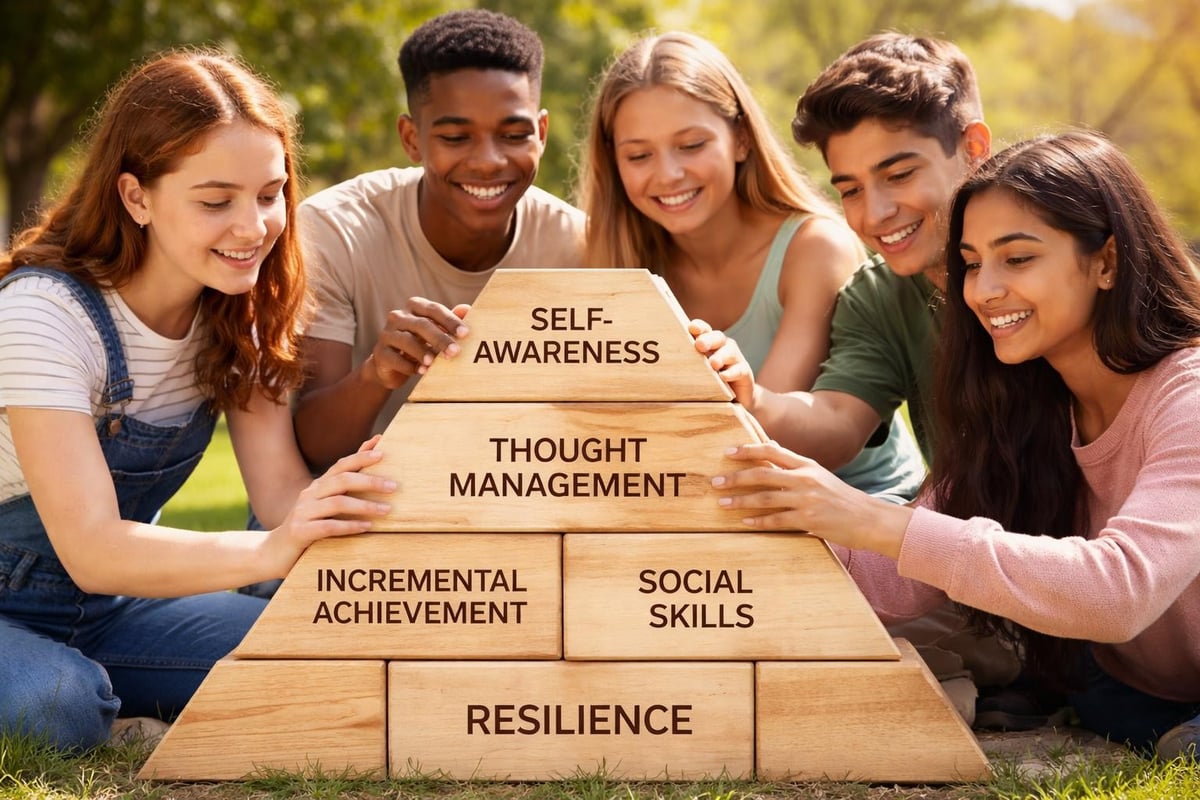
Key components of teenage confidence include:
- Self-awareness and emotional intelligence
- Proven strategies for managing negative thoughts
- Social skills and relationship-building abilities
- Achievement through incremental progress
- Resilience in facing setbacks and criticism
The most effective confidence-building literature addresses these elements systematically. Books like Daring Greatly by Brené Brown explore how vulnerability and authenticity create genuine self-assurance rather than fragile bravado. Similarly, Atomic Habits by James Clear demonstrates how small, consistent actions compound into significant personal transformation.
Essential Categories of Books to Help with Confidence
Different teenagers struggle with distinct aspects of confidence. Some battle internal voices of self-doubt, while others need practical guidance for social situations. Organizing books to help with confidence into categories helps readers identify resources that match their specific challenges.
Mindset and Self-Talk Transformation
The internal dialogue teenagers maintain with themselves profoundly impacts their confidence levels. Books in this category teach readers to recognize destructive thought patterns and replace them with constructive alternatives.
| Book Focus | Primary Benefit | Best For |
|---|---|---|
| Growth Mindset | Reframes failure as learning | Academic struggles |
| Positive Psychology | Builds optimistic thinking patterns | General negativity |
| Cognitive Reframing | Challenges distorted thoughts | Anxiety and worry |
| Self-Compassion | Reduces harsh self-criticism | Perfectionism |
The Magic of Thinking Big by David J. Schwartz remains a classic in this category because it provides actionable strategies for expanding one's vision of what's possible. For teenagers specifically, resources like those available at Emmadavisbooks.com offer age-appropriate frameworks that translate these concepts into language that resonates with adolescent experiences.
The mindset books collection provides specialized resources designed to help teenagers develop the mental habits that support lasting confidence. These materials acknowledge the unique pressures teens face while offering proven techniques for building mental resilience.
Social Skills and Relationship Confidence
Many teenagers possess internal confidence but struggle to express themselves in social situations. Books addressing interpersonal confidence teach specific, learnable skills rather than vague encouragement to "just be yourself."
Practical social confidence skills covered in quality literature:
- Starting and maintaining conversations with peers
- Reading and responding to social cues accurately
- Setting boundaries without damaging relationships
- Handling rejection and social setbacks gracefully
- Building genuine friendships based on shared values
- Navigating group dynamics and peer pressure
Research from PositivePsychology.com indicates that social confidence develops through understanding both the mechanics of interaction and the psychological principles underlying human connection. Books that combine these elements give teenagers a comprehensive toolkit for building meaningful relationships.
The specialized confidence and social skills pack offers integrated resources that address both internal confidence and external expression simultaneously, recognizing that these dimensions reinforce each other.
Selecting the Right Books to Help with Confidence
Not all confidence-building books suit every teenager. Personal learning style, specific challenges, reading level, and current emotional state all influence which resources will prove most beneficial. Making informed selections maximizes the impact of reading time and prevents frustration with materials that don't match a teen's needs.
Matching Books to Individual Learning Styles
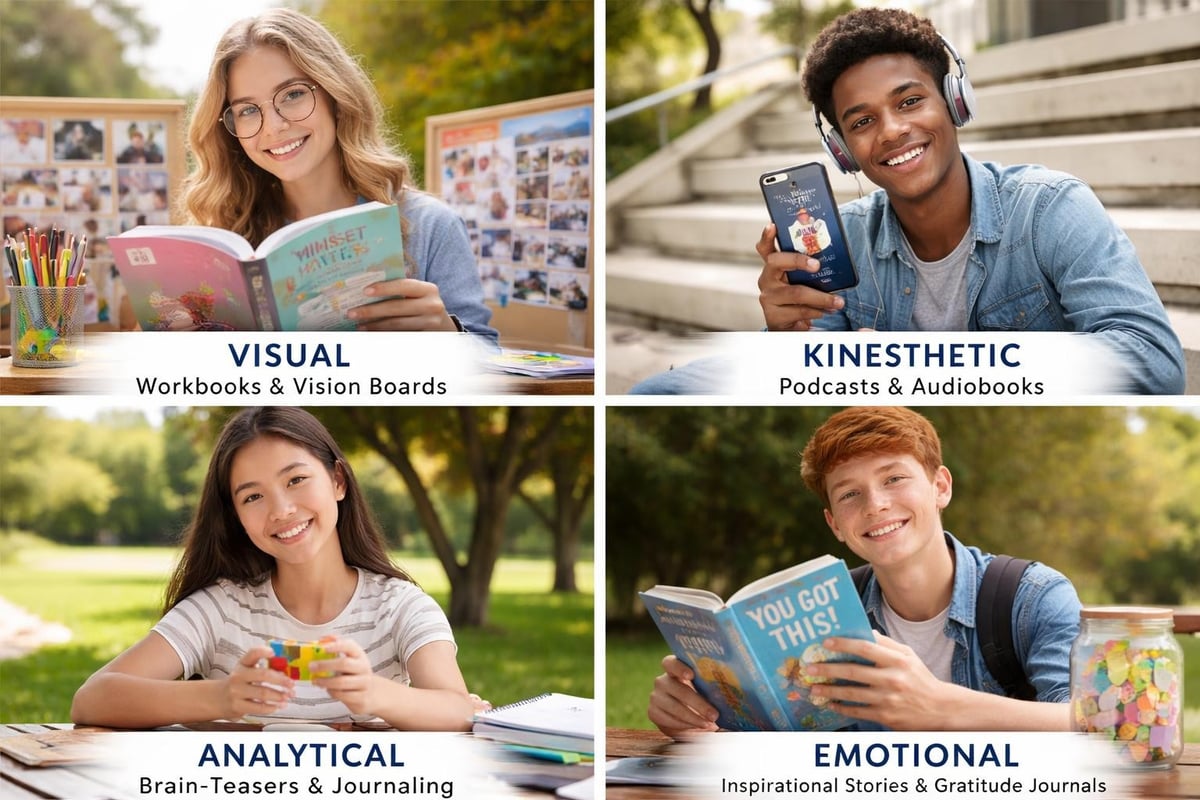
Teenagers absorb information differently based on their cognitive preferences. Some thrive with workbook-style resources featuring exercises and reflection prompts, while others prefer narrative-driven books that illustrate concepts through stories.
Consider these learning style indicators:
- Visual learners benefit from books with diagrams, charts, and visual frameworks
- Kinesthetic learners need interactive elements, exercises, and practical applications
- Analytical thinkers appreciate evidence-based approaches with research citations
- Emotional processors connect with personal stories and vulnerability
Resources like About Time Magazine's confidence book recommendations highlight diverse approaches, helping parents and teens identify formats that match individual preferences. The variety ensures that every teenager can find books to help with confidence that align with how they naturally learn and grow.
Age-Appropriate Content and Complexity
Confidence-building materials designed for adults often miss the mark with teenagers because they reference life experiences, vocabulary, and cultural touchpoints that don't resonate with adolescent reality. Age-appropriate books to help with confidence address issues like academic pressure, dating, friendship drama, body image, and identity formation.
| Age Range | Focus Areas | Content Style |
|---|---|---|
| 13-14 | Body changes, peer acceptance, academic transitions | Simple language, relatable scenarios |
| 15-16 | Dating, independence, identity exploration | Moderate complexity, diverse perspectives |
| 17-18 | Future planning, authentic self-expression, life transitions | Advanced concepts, real-world applications |
The teen mental health bundle exemplifies resources specifically designed for adolescent cognitive and emotional development stages. These materials use language, examples, and frameworks that reflect teenage experiences rather than simply adapting adult content.
Evidence-Based Approaches in Confidence Literature
The most valuable books to help with confidence incorporate psychological research and proven therapeutic techniques rather than generic motivational platitudes. Teenagers benefit from understanding the science behind confidence-building strategies because it validates their struggles and provides concrete reasons to trust the process.
Cognitive Behavioral Principles
Cognitive Behavioral Therapy (CBT) principles appear throughout effective confidence-building literature because they offer practical tools for changing thought patterns that undermine self-assurance. Books incorporating CBT teach teenagers to identify cognitive distortions like catastrophizing, mind-reading, and all-or-nothing thinking.
The DBT Skills Guidebook for Teens applies these evidence-based techniques specifically to adolescent challenges, providing structured exercises that build emotional regulation alongside confidence. These skills prove particularly valuable for teenagers dealing with anxiety or intense emotions that interfere with self-assurance.
Neuroscience and Habit Formation
Understanding how the brain builds new neural pathways through repetition empowers teenagers to persist with confidence-building practices even when immediate results aren't apparent. Books explaining the neuroscience of habit formation, like those discussed in The Book Brief's personal growth recommendations, help teens recognize that confidence develops through consistent practice rather than sudden transformation.
Neuroplasticity principles applied to confidence building:
- Repeated positive behaviors strengthen neural pathways
- Visualization activates similar brain regions as actual experiences
- Emotional states during learning affect memory consolidation
- Small, consistent actions create lasting change more effectively than sporadic intensity
- The brain continues developing throughout adolescence, making teenage years optimal for building new patterns
This scientific foundation helps teenagers understand why books to help with confidence emphasize daily practices and incremental progress rather than dramatic overnight changes. The self-improvement books section explores these concepts in greater depth, connecting research findings to practical application.
Practical Implementation Strategies
Reading books to help with confidence provides little value without implementation. The gap between knowledge and action represents the critical challenge for teenagers seeking to build self-assurance through literature. Effective reading strategies involve active engagement with material rather than passive consumption.
Creating a Confidence-Building Reading Plan
Structure maximizes the impact of confidence-building literature. Rather than randomly selecting books or reading without purpose, a systematic approach ensures comprehensive development across multiple confidence dimensions.
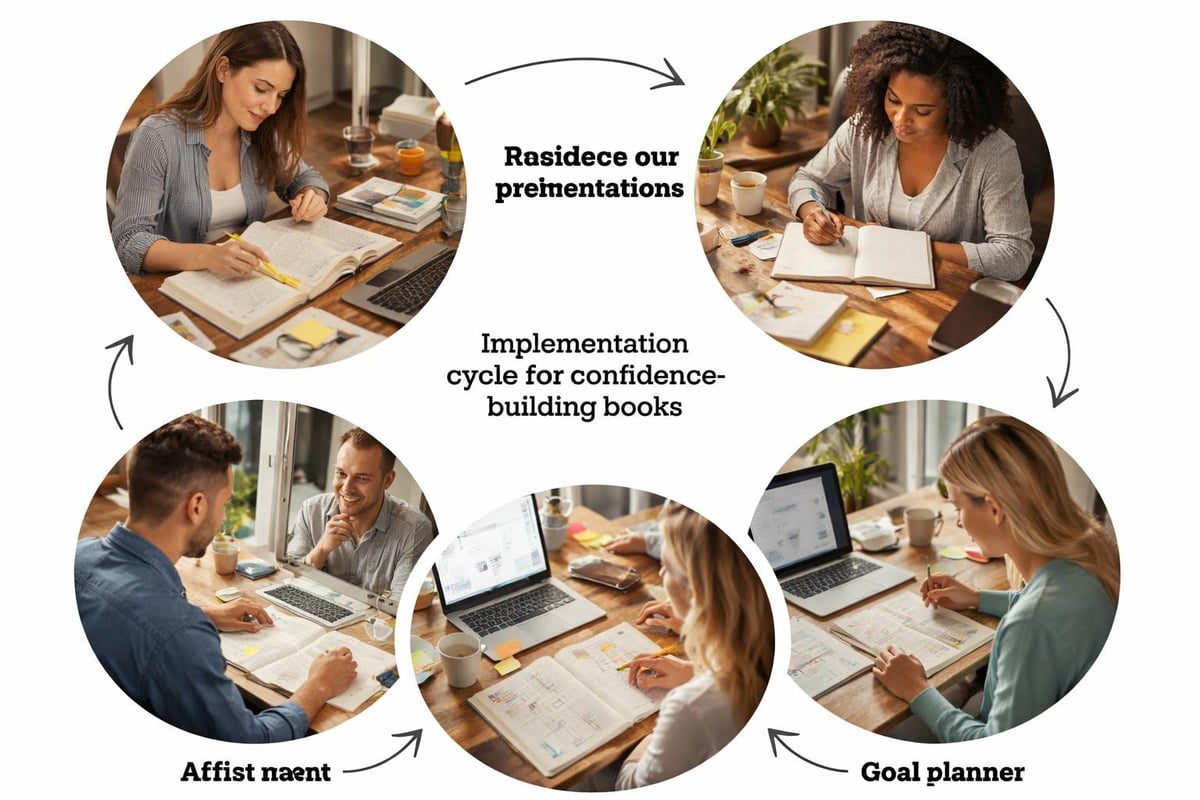
Steps for building an effective reading plan:
- Assess current challenges - Identify specific areas where confidence feels lacking
- Select complementary resources - Choose books addressing different aspects of confidence
- Establish reading routines - Dedicate consistent time rather than sporadic marathons
- Implement immediately - Apply one concept before moving to the next chapter
- Track progress - Document changes in thoughts, behaviors, and feelings
- Adjust approach - Switch resources if a particular book doesn't resonate
The emotional reset kit provides structured frameworks that guide teenagers through this implementation process, ensuring that reading translates into tangible confidence gains rather than remaining abstract knowledge.
Journaling and Reflection Exercises
Accompanying reading with structured reflection deepens understanding and accelerates confidence development. Journaling transforms passive reading into active learning by forcing articulation of how concepts apply to personal circumstances.
Effective journaling prompts for confidence-building reading:
- What specific situation would I handle differently using today's reading?
- Which idea challenged my current beliefs about myself?
- What evidence contradicts the negative thought I identified?
- How did this author's experience relate to my own struggles?
- What one action will I take tomorrow based on this chapter?
Resources designed specifically for teenagers, like those in the puberty confidence kit, often include built-in reflection exercises that guide this process without requiring teens to develop their own framework from scratch.
Combining Multiple Resources for Comprehensive Growth
While individual books provide valuable insights, combining multiple books to help with confidence across different categories creates a more robust foundation. Confidence encompasses numerous interconnected elements, and addressing them systematically produces better results than focusing narrowly on a single dimension.
Building a Personal Confidence Library
Curating a collection of resources allows teenagers to return to different books as various challenges emerge. The teenager struggling with social anxiety in freshman year may benefit from different materials than the same person facing college application stress as a senior.
| Challenge Type | Primary Resource Category | Complementary Materials |
|---|---|---|
| Test anxiety | Mindset and thought management | Stress reduction techniques |
| Social awkwardness | Interpersonal skills development | Communication strategies |
| Body image concerns | Self-acceptance and compassion | Identity formation guidance |
| Future uncertainty | Goal-setting and planning | Decision-making frameworks |
The shop all books section offers comprehensive resources addressing various confidence challenges teenagers encounter throughout adolescence. Building a personal library ensures appropriate guidance is available when specific issues arise.
Integrating Multiple Perspectives
Different authors bring unique backgrounds, research bases, and philosophical approaches to confidence building. Exposure to multiple perspectives prevents rigid thinking and helps teenagers develop nuanced understanding of self-assurance.
Some books emphasize achievement and capability as confidence sources, while others focus on self-acceptance independent of accomplishments. Both approaches offer value, and teenagers benefit from understanding when each perspective applies most effectively. The comprehensive approach found in resources like those available through Emmadavisbooks.com integrates multiple evidence-based methodologies rather than promoting a single dogmatic approach.
Supporting Teenagers Through Their Reading Journey
Parents, educators, and mentors play crucial roles in maximizing the impact of books to help with confidence. Simply providing resources without support often yields disappointing results, while appropriate guidance amplifies the benefits exponentially.
Creating Safe Discussion Spaces
Teenagers need opportunities to discuss what they're reading without fear of judgment or unsolicited advice. Open-ended questions about their reactions to material foster deeper processing than directive instructions about implementation.
Effective discussion approaches:
- "What surprised you most about that chapter?"
- "Did any part of that resonate with something you've experienced?"
- "How do you think that strategy might work in your situation?"
- "What questions did that reading raise for you?"
These questions invite reflection without imposing adult interpretations or minimizing teenage experiences. The goal involves supporting independent thinking rather than dictating conclusions.
Modeling Confidence Development
Adults who openly share their own confidence struggles and growth processes provide powerful examples that books alone cannot offer. Demonstrating vulnerability while discussing personal development normalizes the ongoing nature of confidence building.
Teenagers benefit from understanding that confidence isn't a destination adults reach and then maintain effortlessly. Sharing which books to help with confidence have impacted adult lives creates intergenerational connection and demonstrates that personal growth continues throughout life. This modeling, combined with age-appropriate resources like the growth mindset guide for teens, creates a comprehensive support system.
Measuring Progress and Maintaining Momentum
Confidence develops gradually through accumulated small wins rather than sudden breakthroughs. Teenagers need frameworks for recognizing progress that might otherwise go unnoticed, preventing discouragement when dramatic changes don't materialize immediately.
Establishing Concrete Confidence Metrics
Abstract goals like "be more confident" provide insufficient feedback for tracking progress. Specific, observable behaviors create measurable indicators that validate effort and highlight growth.
Trackable confidence indicators for teenagers:
- Number of times initiating conversation with new people weekly
- Frequency of volunteering answers in class despite uncertainty
- Ability to make decisions without excessive reassurance-seeking
- Comfort trying new activities outside established skill areas
- Recovery time after setbacks or criticism
Pairing these metrics with reading allows teenagers to connect specific books to help with confidence with concrete behavioral changes. This evidence-based approach prevents the discouragement that emerges when relying solely on subjective feelings, which fluctuate daily.
Addressing Plateaus and Setbacks
Every confidence-building journey includes periods where progress stalls or temporary regressions occur. Books preparing teenagers for this reality prevent abandonment of effective strategies during challenging phases.
Understanding that setbacks represent normal parts of development rather than personal failures helps maintain motivation through difficult periods. Resources addressing emotional management, like those in the managing teen emotions collection, provide tools for navigating these inevitable challenges without losing momentum.
Long-Term Integration of Confidence Principles
The ultimate goal of books to help with confidence involves internalization rather than dependence. Teenagers should gradually develop self-awareness and problem-solving capabilities that reduce reliance on external resources over time.
Transitioning from Guided to Independent Practice
As teenagers master concepts from confidence-building literature, they develop capacity for self-directed growth. This transition represents success rather than completion, as confident individuals continue learning and developing throughout life.
Signs of successful internalization:
- Automatically recognizing and challenging negative self-talk without prompting
- Independently identifying situations requiring boundary-setting
- Naturally applying learned strategies to new challenges
- Seeking appropriate resources when encountering unfamiliar difficulties
- Sharing confidence-building insights with peers facing similar struggles
This progression from dependent learning to independent application marks the true measure of effective confidence development through reading.
Building Lasting Reading Habits
The benefits of books to help with confidence extend beyond specific titles addressing self-assurance. Developing lifelong reading habits provides ongoing access to knowledge, perspective, and growth opportunities that support confidence throughout adulthood.
Teenagers who establish regular reading practices gain tools for navigating every future transition and challenge. The faith and values pack and similar comprehensive resources demonstrate how reading supports holistic development across multiple life dimensions simultaneously.
Building genuine confidence requires more than positive thinking or temporary motivation. The right books to help with confidence provide teenagers with evidence-based strategies, relatable experiences, and practical tools that create lasting transformation. Reading offers a judgment-free space for exploring insecurities, learning proven techniques, and developing the mental frameworks necessary for navigating adolescence and beyond with resilience. Emmadavisbooks.com specializes in creating comprehensive guides specifically designed for teenagers, offering practical toolkits and resources that address the unique confidence challenges young people face today. Explore their tailored materials to give the teenagers in your life the structured support they need to build unshakable self-assurance.