


Biography for Teens: A Guide to Writing Life Stories
Writing a biography for teens represents more than just a school assignment. It offers a unique opportunity to develop critical thinking skills, empathy, and historical awareness while exploring the lives of remarkable individuals. Whether documenting the achievements of a family member, historical figure, or contemporary role model, the process of crafting biographical narratives teaches young writers how to research, analyze, and present information in compelling ways. This skill extends far beyond the classroom, supporting personal development and building foundational competencies that benefit teens throughout their academic and professional journeys.
Understanding What Makes a Biography Engaging
A successful biography for teens balances factual accuracy with engaging storytelling. Unlike a simple timeline of events, an effective biographical narrative captures the essence of a person's character, motivations, and impact on the world. Young writers must learn to identify the defining moments that shaped their subject's life while presenting these details in ways that resonate with contemporary readers.
The most compelling biographies reveal universal themes that connect past and present. When teens write about historical figures overcoming adversity, they can draw parallels to modern challenges around building essential life skills and personal resilience. This connection transforms dry facts into meaningful narratives that inspire and educate.
Key Elements Every Biography Needs
Every strong biography includes several fundamental components. First, biographical writing requires thorough research from credible primary and secondary sources. Second, the narrative needs a clear structure that guides readers through the subject's life logically. Third, compelling biographies incorporate specific details and anecdotes that bring the subject to life rather than merely listing achievements.
Essential components include:
- Comprehensive introduction establishing who the person is and why they matter
- Chronological or thematic organization of life events
- Specific examples and stories that illustrate character traits
- Context explaining the historical or cultural environment
- Analysis of the subject's lasting impact or legacy
Selecting the Right Subject
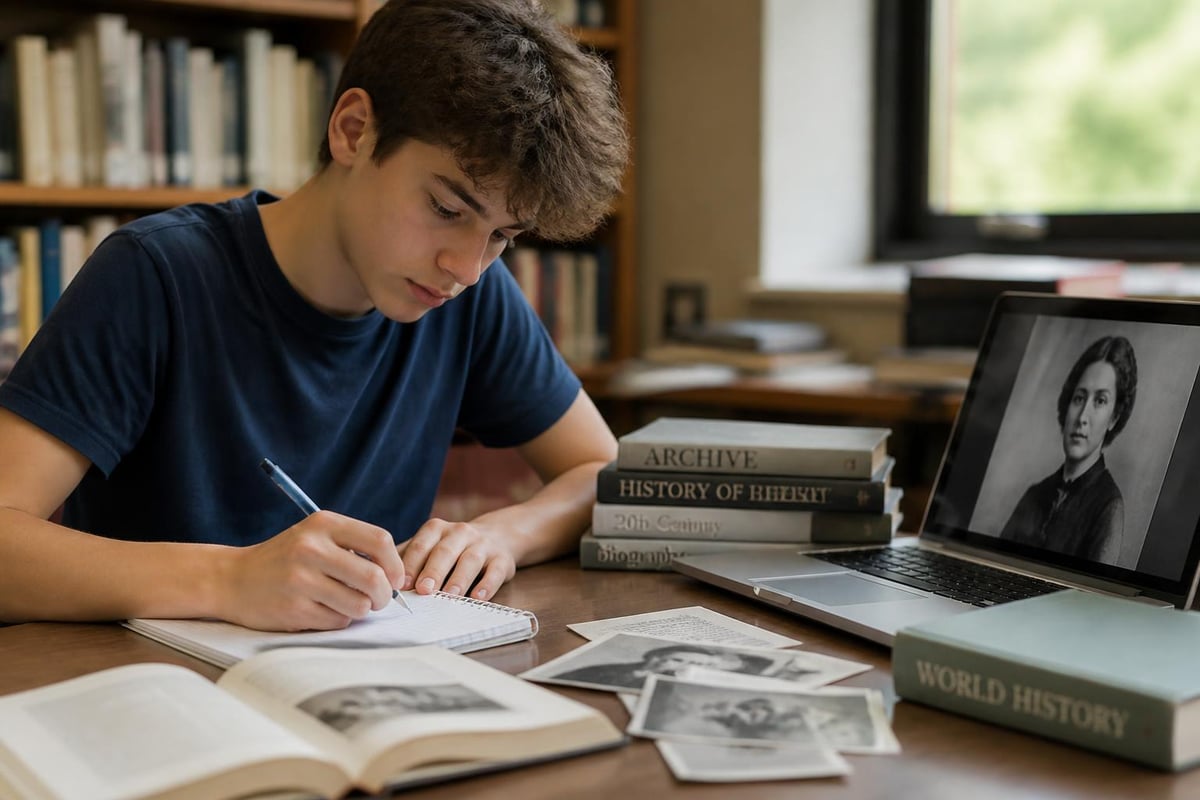
Choosing an appropriate subject represents the critical first step in writing a biography for teens. The ideal subject should be someone who genuinely interests the writer while offering sufficient available information for thorough research. Teens might consider historical figures who broke barriers, contemporary leaders addressing current issues, or even family members whose experiences offer valuable lessons.
When selecting subjects, young writers should ask themselves specific questions about accessibility and relevance. Can they find enough credible sources about this person? Does the subject's life story offer lessons applicable to modern challenges? Will researching this individual hold their interest through weeks or months of work?
| Selection Criteria | Why It Matters | Example Questions |
|---|---|---|
| Available Resources | Ensures adequate research material | Are there published biographies, interviews, or archival documents? |
| Personal Interest | Maintains motivation throughout project | Does this person's work or life resonate with my values? |
| Relevance to Audience | Makes the biography meaningful to readers | What can teens today learn from this person's experiences? |
| Complexity | Provides depth without overwhelming | Does this subject have enough interesting facets to explore? |
Teens writing biographies often discover unexpected connections between their subjects and their own lives. A student researching a civil rights activist might find parallels with developing confidence and standing up for personal beliefs. This personal connection strengthens the final narrative and deepens the writer's engagement with the material.
Conducting Thorough Research
Effective research forms the backbone of any quality biography for teens. Young writers must develop skills in locating, evaluating, and synthesizing information from diverse sources. Tips for writing biographies emphasize the importance of consulting both primary sources like letters, speeches, and interviews, and secondary sources including scholarly articles and previously published biographies.
Primary vs. Secondary Sources
Understanding the distinction between source types helps teen writers build authoritative narratives. Primary sources offer direct evidence from the historical period or from the subject themselves. Secondary sources provide analysis and interpretation from scholars and researchers who have studied the subject.
Primary sources include:
- Personal letters, diaries, and journals
- Speeches and public statements
- Photographs and video recordings
- Official documents and records
- Direct interviews with the subject or contemporaries
Secondary sources include:
- Published biographies and autobiographies
- Scholarly articles and books
- Documentary films and podcasts
- Newspaper and magazine articles
- Academic research papers
The comprehensive guide on biography writing recommends creating a research system that tracks sources, organizes notes by theme or chronology, and identifies gaps requiring additional investigation. This organizational approach prevents confusion and ensures young writers can properly cite their sources.
Structuring Your Biographical Narrative
Once research is complete, teens face the challenge of organizing their findings into coherent narratives. The structure of a biography for teens can follow several patterns, each offering distinct advantages depending on the subject and the writer's goals.
Chronological vs. Thematic Organization
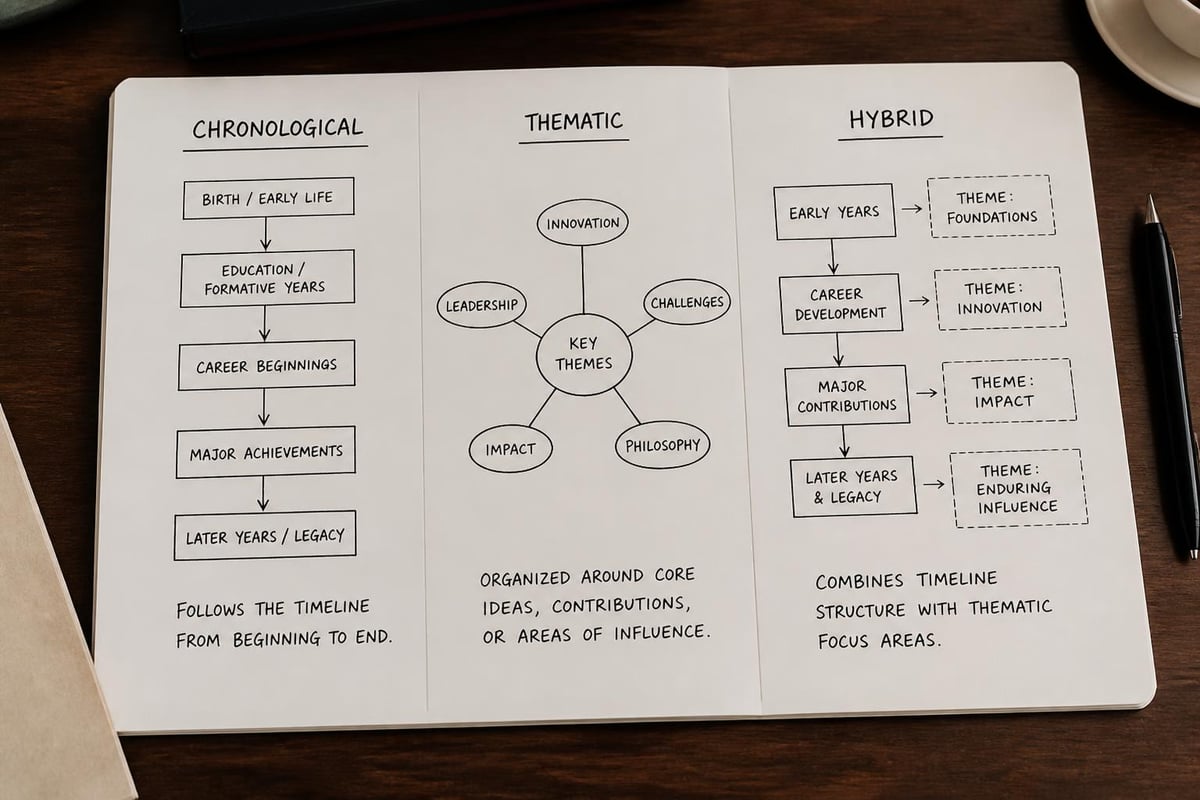
The chronological approach presents events in the order they occurred, from birth through significant life stages to the present or death. This traditional structure works well for subjects whose lives followed clear developmental arcs or who achieved success through steady progression. Conversely, thematic organization groups information around central ideas, characteristics, or areas of contribution rather than strict timelines.
Many effective biographies blend both approaches, using a chronological framework while dedicating sections to exploring specific themes in depth. For instance, a biography of a scientist might follow their life chronologically while including thematic chapters focused on their major discoveries, teaching philosophy, or personal relationships.
| Structure Type | Best For | Advantages | Challenges |
|---|---|---|---|
| Chronological | Lives with clear progression | Easy to follow, shows development | Can feel predictable |
| Thematic | Complex figures with multiple contributions | Highlights specific achievements | May confuse timeline |
| Hybrid | Most subjects | Combines clarity with depth | Requires careful planning |
The opening of any biography for teens must capture reader attention immediately. Rather than beginning with birth details, many successful biographies start with a pivotal moment that exemplifies the subject's character or significance. This technique, known as in medias res, hooks readers before circling back to provide background information.
Crafting Compelling Prose
Writing style significantly impacts how effectively a biography for teens communicates its subject's story. Young writers should strive for clear, engaging prose that balances factual reporting with narrative interest. This balance requires conscious attention to sentence variety, active voice, and vivid details that help readers visualize scenes and understand motivations.
Showing Rather Than Telling
Strong biographical writing demonstrates character traits through specific examples rather than simply stating them. Instead of writing "She was brave," effective biographers describe the moment their subject confronted danger or stood up for beliefs despite consequences. These concrete examples allow readers to draw their own conclusions while experiencing the narrative more viscerally.
Dialogue, when available from historical records or interviews, brings biographies to life by allowing subjects to speak in their own voices. Teens should only include dialogue they can verify through sources, using quotation marks appropriately and providing citations. When direct quotes aren't available, they can paraphrase based on documented evidence while avoiding fabrication.
The step-by-step biography writing guide emphasizes maintaining objectivity while acknowledging human complexity. Teen writers should present their subjects honestly, including both strengths and weaknesses without passing judgment. This balanced approach creates more nuanced, believable portraits than one-dimensional hero worship.
Developing Research Skills Through Biography
Working on a biography for teens develops transferable research and analysis skills applicable across academic disciplines and real-world situations. The process teaches young people how to evaluate source credibility, synthesize conflicting information, and construct evidence-based arguments. These competencies support success in college, career, and civic participation.
Evaluating Source Reliability
In an era of abundant online information, discerning reliable sources from questionable ones represents a critical skill. Teen biographers must assess author credentials, publication venues, evidence quality, and potential biases. They learn to ask: Who created this source and what qualifies them? What evidence supports their claims? Might they have reasons to present information selectively?
This critical evaluation extends beyond academic contexts. The same skills that help teens assess biographical sources prepare them for managing emotions and mental health by evaluating self-help advice, or making informed consumer decisions by researching products objectively.
Questions for evaluating sources:
- Who is the author and what are their qualifications?
- When was this information published or last updated?
- What evidence supports the claims made?
- Are alternative perspectives acknowledged?
- Can you verify key facts through multiple independent sources?
Incorporating Visual Elements
Modern biographies often enhance text with photographs, maps, timelines, and other visual elements that provide context and break up dense prose. When creating a biography for teens, young writers should consider how visuals might strengthen their narratives while ensuring proper attribution for any borrowed images.
Timelines prove particularly effective for helping readers track multiple simultaneous events or understand how a person's achievements fit within broader historical contexts. A visual timeline might show when an inventor created their key innovations alongside contemporary world events, illustrating how historical circumstances influenced their work.
Creating original visual elements also develops design and communication skills. Teens might photograph locations significant to their subject, create infographics summarizing key accomplishments, or design charts comparing their subject's achievements with those of contemporaries. These supplementary materials deepen engagement with the subject matter while producing portfolio-worthy work samples.
Learning From Published Examples
Reading accomplished biographies helps teen writers understand effective techniques and develop their own voices. Curated biography lists for teens showcase diverse subjects and writing styles, offering models for aspiring biographers to study and emulate.

Analyzing Narrative Techniques
When reading published biographies, teens should pay attention to specific craft elements. How does the author open each chapter? Which details are emphasized and which are minimized? How does the writer transition between time periods or themes? What types of sources appear most frequently in citations?
This analytical reading develops critical thinking alongside writing skills. Teens learn to recognize that every biographical choice reflects authorial decisions about what matters most. Different biographers might tell the same person's story quite differently based on their research focus, intended audience, or thematic interests. Understanding these variations helps young writers make deliberate choices in their own work.
Connecting Biography to Personal Development
Writing a biography for teens offers unexpected benefits for personal growth and self-understanding. As young people research how others navigated challenges, made difficult decisions, or persevered through setbacks, they gain frameworks for approaching their own obstacles. This connection between biographical study and books on self-improvement makes the genre particularly valuable during adolescence.
Finding Inspiration in Life Stories
Many teens discover role models through biographical research whose experiences speak directly to their current challenges. A student struggling with peer pressure might find strength in reading about activists who stood firm in their convictions despite social consequences. Someone uncertain about career paths could gain clarity by studying how their subject discovered their calling, often after multiple false starts.
The process of documenting another person's resilience can inspire teens to develop their own coping strategies and growth mindsets. When young writers see documented evidence of historical figures overcoming poverty, discrimination, disability, or other hardships, it reinforces the message that challenges need not define destinies. This realization supports the development of essential life skills including perseverance, adaptability, and self-advocacy.
Addressing Common Challenges
Teen writers frequently encounter specific obstacles when working on biographical projects. Recognizing these common challenges and developing strategies to address them increases the likelihood of successful completion and satisfying final products.
Typical challenges and solutions:
- Information overload: Create clear organizational systems early. Use digital tools or physical filing methods to categorize research by theme or chronology.
- Contradictory sources: Document discrepancies and explain them in the biography. Multiple perspectives often reveal complexity rather than representing problems.
- Maintaining interest: Choose subjects genuinely fascinating to you. Connect their experiences to modern issues you care about.
- Citation confusion: Learn one citation style thoroughly rather than mixing formats. Use citation management tools to track sources from the beginning.
- Writer's block: Write sections out of order. Start with the parts that excite you most rather than forcing linear progression.
The practical biography writing resource offers templates and exercises helping teens work through these common stumbling blocks systematically. Breaking the project into manageable steps prevents overwhelm and maintains momentum throughout the writing process.
Biographical Sketches vs. Full Biographies
Not every biographical writing project requires book-length treatment. Teen writers should understand the distinction between comprehensive biographies and biographical sketches, choosing the appropriate format for their purposes and available time. Tips for biographical sketches explain how to create concise yet impactful shorter pieces.
When to Write Brief vs. Extended Biographies
Biographical sketches typically range from 300 to 1,500 words, focusing on the most significant aspects of a person's life rather than comprehensive coverage. These shorter pieces work well for class assignments with word limits, anthology contributions, or website profiles. They require careful selection of the most important details and ruthless editing to maintain focus.
Full-length biographies allow deeper exploration of complexity, contradictions, and context. These extended works might span 10,000 words or more, incorporating extensive research and nuanced analysis. Teens undertaking major research projects, independent studies, or competitions often choose this comprehensive format.
| Format | Typical Length | Best For | Key Challenge |
|---|---|---|---|
| Biographical Sketch | 300-1,500 words | Quick overviews, introductions | Selecting what to include |
| Short Biography | 2,000-5,000 words | School assignments, articles | Balancing breadth and depth |
| Full Biography | 10,000+ words | Independent studies, books | Maintaining reader engagement |
Incorporating Interviews and Original Research
Advanced biography projects for teens might include original research through interviews with living subjects or people who knew deceased subjects. This primary source development adds unique value while teaching interviewing skills applicable in journalism, business, and many other fields.
Conducting Effective Interviews
Successful interviews require preparation, active listening, and thoughtful follow-up. Teens should research their interview subjects beforehand, preparing open-ended questions that encourage detailed responses rather than yes-or-no answers. Recording interviews (with permission) ensures accuracy while allowing interviewers to focus on the conversation rather than frantic note-taking.
After conducting interviews, teen biographers must decide how to incorporate this material into their narratives. Direct quotations provide authentic voice and credibility. Paraphrased information offers flexibility in presentation. The most effective biographies blend both approaches, using direct quotes for particularly meaningful or eloquent statements while paraphrasing routine factual information.
Biography as a Tool for Historical Understanding
Writing a biography for teens serves educational purposes beyond developing writing skills. Biographical research makes history tangible and personal, transforming abstract historical periods into lived experiences through individual stories. This personalized approach to history often proves more engaging and memorable than textbook overviews of political or economic trends.
Contextualizing Individual Lives
Strong biographies situate their subjects within broader historical contexts, helping readers understand how social, political, and cultural forces shaped individual choices and opportunities. A biography of an immigrant entrepreneur might explore immigration policies, economic conditions, and social attitudes during their era, illuminating how these factors influenced their journey.
This contextual approach develops analytical thinking as teens learn to recognize connections between individual agency and systemic constraints. They begin understanding how historical figures both influenced and were influenced by their times, a nuanced perspective that supports social skills development by fostering empathy and multiple perspective-taking.
Digital Tools for Biography Research and Writing
Modern technology offers teen biographers powerful tools for research, organization, and presentation. Digital archives provide access to primary sources previously available only in physical repositories. Citation management software streamlines documentation. Multimedia platforms enable creative presentation formats beyond traditional text.
Leveraging Online Resources
Digital libraries, historical society websites, and specialized databases grant unprecedented access to photographs, documents, recordings, and other primary sources. Teens can examine handwritten letters, listen to historical speeches, or view archival photographs from their own devices. This accessibility democratizes biographical research while requiring enhanced digital literacy to evaluate source credibility.
However, age-appropriate biography recommendations remind young researchers that not all valuable sources exist in digital formats. Complete biographical research often requires visiting physical libraries, archives, or museums. This hybrid approach combining digital convenience with traditional research methods produces the most comprehensive results.
Useful digital tools for teen biographers:
- Google Scholar - Finding academic articles and books
- Citation generators - Creating properly formatted references
- Digital voice recorders - Capturing interview audio
- Cloud storage - Organizing research across devices
- Timeline creators - Visualizing chronological information
- Mind mapping software - Connecting thematic elements
Revising and Editing Biographical Work
Initial drafts rarely represent final products. Teen writers must develop revision skills, learning to read their work critically and make substantive improvements beyond correcting typos. Effective revision transforms adequate biographies into compelling narratives that engage readers while maintaining factual accuracy.
Seeking Constructive Feedback
Outside perspectives help identify areas needing clarification, sections dragging with excessive detail, or gaps requiring additional information. Teens might share drafts with teachers, family members, writing group peers, or online communities focused on young writers. When possible, having someone unfamiliar with the biographical subject read the draft reveals whether the narrative provides sufficient context for general audiences.
Receiving criticism constructively represents an important life skill extending far beyond biography writing. Learning to distinguish helpful feedback from unhelpful comments, implementing suggestions that strengthen work while maintaining personal voice, and graciously accepting critique all contribute to professional and personal development. These interpersonal competencies support the broader goals of teen development resources focused on building confidence and resilience.
Publishing and Sharing Your Biography
Completing a biography for teens creates opportunities for sharing work with wider audiences. Modern publishing platforms enable young writers to distribute their biographies through blogs, online magazines, self-publishing services, or writing competitions. This public sharing adds purpose to the project while building portfolio materials for college applications or future opportunities.
Distribution Options for Student Work
School literary magazines, local newspapers, and community history organizations often welcome well-researched biographical pieces from teen writers. National writing contests focused on biography or historical writing provide recognition and sometimes financial prizes. Digital platforms like Medium or personal blogs allow complete creative control while building online presence.
Each publication venue requires different formatting, length, and style considerations. Teens should carefully review submission guidelines, adapting their work to meet specific requirements while maintaining the core narrative. This flexibility in presentation strengthens professional communication skills applicable across contexts.
Writing a biography for teens develops research, analysis, and communication skills while building historical knowledge and empathy. Whether documenting family history or studying influential figures, biographical writing connects young people with meaningful stories that inspire personal growth. At Emmadavisbooks.com, we provide comprehensive resources supporting teen development across essential skill areas. Our guides help young people build confidence, manage challenges, and develop the resilience needed to pursue their goals with determination and purpose.