


Books About Emotions: Essential Reading for Teens
Understanding and managing emotions is one of the most critical skills teenagers can develop during adolescence. Books about emotions serve as powerful tools for helping young people navigate the complex feelings that accompany this transformative life stage. Whether teens are dealing with anxiety, anger, sadness, or the everyday ups and downs of growing up, literature focused on emotional intelligence provides both validation and practical strategies. For parents, educators, and therapists working with adolescents, these resources offer structured pathways to meaningful conversations about feelings, mental health, and personal growth.
Why Emotional Literacy Matters for Teenagers
The teenage years bring unprecedented emotional complexity. Hormonal changes, social pressures, academic demands, and identity formation create a perfect storm of feelings that can overwhelm even the most resilient young people. Emotional literacy refers to the ability to recognize, understand, label, and express emotions in healthy ways.
Research consistently shows that teens with strong emotional literacy skills demonstrate better mental health outcomes, stronger relationships, and greater academic success. They're more equipped to handle stress, resolve conflicts, and make thoughtful decisions. Books about emotions provide teenagers with a vocabulary for their inner experiences and normalize the wide range of feelings they encounter.
The Science Behind Reading and Emotional Understanding
Studies have demonstrated that fiction reading enhances emotion recognition abilities, allowing readers to practice interpreting emotional cues in a safe environment. When teens read about characters experiencing similar challenges, they develop empathy for others while also gaining perspective on their own situations.
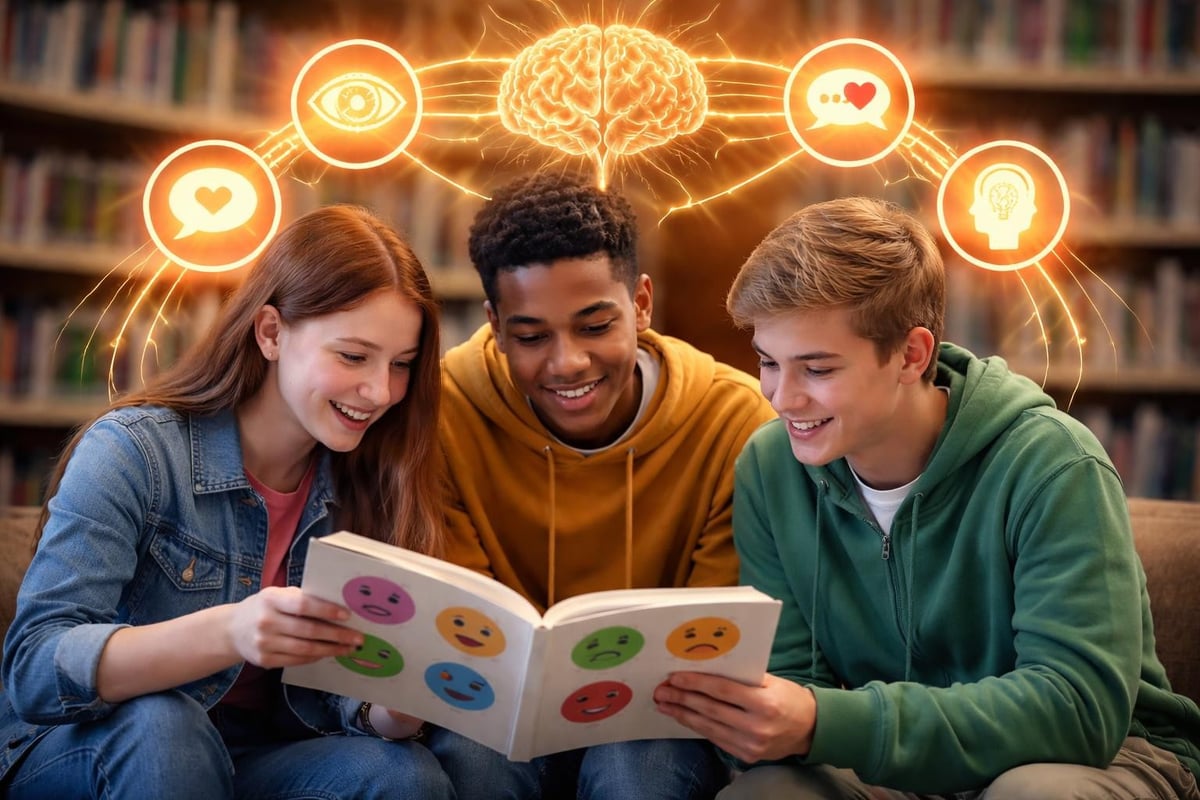
The process of reading about emotions activates the same neural pathways as experiencing those emotions firsthand. This means that when a teenager reads about a character managing disappointment or processing grief, their brain is actually practicing those emotional responses. This rehearsal builds resilience and expands their emotional toolkit for real-world situations.
Categories of Books About Emotions for Teens
Books about emotions come in various formats, each serving different purposes and learning styles. Understanding these categories helps parents and educators select the most appropriate resources for individual teens.
| Category | Purpose | Best For |
|---|---|---|
| Self-Help Guides | Provide practical strategies and exercises | Teens ready to actively work on emotional skills |
| Memoirs | Share real-life emotional journeys | Teens seeking validation and connection |
| Fiction | Explore emotions through storytelling | Reluctant readers or those who prefer narrative learning |
| Workbooks | Offer structured activities and reflection prompts | Teens who benefit from hands-on practice |
| Reference Books | Explain emotions and their psychology | Intellectually curious teens |
Self-Help and Personal Development Books
Self-help books about emotions give teenagers actionable frameworks for managing their feelings. These resources typically combine psychological research with practical exercises, making them valuable companions for teens committed to personal growth.
The teen mental health bundle offers comprehensive tools specifically designed to help adolescents understand and regulate their emotions. Such resources break down complex emotional concepts into age-appropriate language and provide step-by-step guidance.
Key features of effective self-help books include:
- Clear explanations of emotional processes
- Evidence-based coping strategies
- Relatable examples from teenage experiences
- Interactive exercises and reflection questions
- Progress tracking tools
Books like Daring Greatly by Brené Brown explore vulnerability and courage, helping teens understand that showing emotions isn't weakness but rather a source of strength and authentic connection. While originally written for adults, Brown's work has found a devoted following among mature teenagers seeking to understand their emotional landscape.
Understanding Complex Emotions Through Literature
Not all emotions are straightforward. Teenagers often experience mixed feelings, contradictory impulses, and emotional states they struggle to name. Books about emotions that tackle this complexity help adolescents develop nuanced emotional understanding.
Atlas of the Heart by Brené Brown maps 87 distinct emotions and experiences, providing language for feelings that teens might not have words for. This vocabulary expansion is transformative because we cannot regulate what we cannot name. When a teenager can distinguish between disappointment, regret, and grief, they can respond to each emotion more appropriately.
The Bittersweet Nature of Adolescent Emotions
Adolescence itself is bittersweet: gaining independence while losing childhood security, forming new identities while leaving old selves behind. Bittersweet: How Sorrow and Longing Make Us Whole by Susan Cain explores how embracing difficult emotions can lead to deeper appreciation of life's beauty. This perspective is particularly valuable for teens who've been taught to avoid or suppress negative feelings.
The concept that sadness and joy can coexist, that longing serves a purpose, and that vulnerability creates connection challenges the either/or thinking common in adolescence. Books about emotions that embrace this complexity prepare teens for the emotional reality of adult life.

Practical Approaches to Emotional Management
While understanding emotions intellectually matters, teens need practical strategies for managing feelings in real-time. The most effective books about emotions combine theory with application, offering techniques teens can use when overwhelmed, anxious, or upset.
Evidence-based emotional regulation techniques include:
- Deep breathing exercises for immediate physical calming
- Cognitive reframing to challenge unhelpful thought patterns
- Emotional labeling to reduce intensity of feelings
- Physical movement to process emotions through the body
- Journaling for reflection and pattern recognition
- Mindfulness practices to stay present rather than ruminating
The emotional reset kit provides teenagers with structured approaches to implementing these strategies. Such resources recognize that knowing about emotional regulation differs significantly from being able to practice it during moments of distress.
Building an Emotional Toolkit
Just as different situations require different tools, various emotional states call for distinct management approaches. Books about emotions that present multiple strategies empower teens to experiment and discover what works best for their unique personalities and circumstances.
Some teenagers find physical strategies most helpful: going for a run, doing yoga, or engaging in sports to process intense feelings. Others prefer cognitive approaches: analyzing their thoughts, writing, or talking through emotions with trusted adults. Still others need creative outlets: art, music, or dance to express what words cannot capture.
Choosing Age-Appropriate Books About Emotions
Not all books about emotions suit every teenager. Developmental stage, reading level, personal interests, and specific challenges all influence which resources will resonate most effectively. A thirteen-year-old navigating the early stages of puberty needs different support than a seventeen-year-old preparing for college.
Early Adolescence (Ages 11-14)
Younger teens benefit from books that acknowledge their emerging emotional complexity while remaining accessible and non-overwhelming. Resources that use illustrations, clear formatting, and concrete examples work particularly well for this age group.
Books that validate the confusion of early adolescence while offering simple coping strategies build confidence. The puberty confidence kit addresses the unique emotional challenges of this developmental stage, helping younger teens understand that their feelings are normal responses to significant physical and social changes.
Middle Adolescence (Ages 15-16)
Mid-teens often seek deeper understanding of why they feel what they feel. They're capable of more abstract thinking and appreciate books about emotions that explore psychological concepts, albeit in accessible language.
This age group particularly benefits from resources addressing social anxiety, peer relationships, identity formation, and future planning. Books that acknowledge the pressure teens face while offering agency and hope strike the right balance.
Late Adolescence (Ages 17-18)
Older teens preparing for adulthood need books about emotions that treat them as emerging adults. They appreciate sophisticated content, research-based approaches, and strategies they'll continue using beyond high school.
Resources focused on resilience, life skills, and emotional independence serve this group well. The confidence social skills pack helps older teens develop the emotional competencies they'll need in college, workplace, and adult relationships.
Integrating Books Into Daily Life
Owning books about emotions isn't enough; teens need support integrating these resources into their daily routines. Parents, educators, and therapists play crucial roles in facilitating this integration.
Effective integration strategies include:
- Reading together and discussing key concepts
- Setting aside regular time for emotional check-ins
- Practicing recommended exercises as a family
- Creating accountability systems for applying new skills
- Celebrating progress and emotional growth milestones
The books on self-improvement available through specialized resources provide structured pathways that support consistent engagement rather than one-time reading.
Making Reading Interactive
Passive reading rarely creates lasting change. Interactive engagement with books about emotions amplifies their impact. Teens might journal responses to reflection questions, share insights with friends, or teach concepts to younger siblings.
Book clubs focused on emotional development create community around growth. When teens realize their peers also struggle with difficult feelings, isolation decreases and motivation increases. Discussion transforms individual reading into collective learning.

Beyond Books: Comprehensive Emotional Support
While books about emotions provide invaluable knowledge and strategies, they work best as part of comprehensive support systems. Teenagers need multiple touchpoints for emotional learning: trusted adults, peer connections, professional help when needed, and structured resources.
| Support Type | Role | When Most Helpful |
|---|---|---|
| Books | Provide knowledge and strategies | Ongoing learning and reference |
| Therapy | Offer personalized professional guidance | Crisis situations or ongoing challenges |
| Parents/Guardians | Give consistent support and modeling | Daily life and major decisions |
| Peers | Create belonging and shared experiences | Social navigation and validation |
| School Resources | Deliver structured programs | Academic stress and social issues |
Understanding A General Theory of Love reveals that humans are fundamentally relational beings whose emotional systems develop through connection with others. Books about emotions complement but cannot replace the human relationships essential for healthy development.
Addressing Specific Emotional Challenges
Different teenagers face distinct emotional challenges based on their circumstances, temperament, and experiences. Targeted books about emotions addressing specific issues provide focused support beyond general emotional literacy.
Anxiety and Worry
Teenage anxiety has reached unprecedented levels, with many adolescents reporting persistent worry, panic attacks, or avoidance behaviors. Books specifically addressing anxiety help teens understand the biological basis of their fear response while offering concrete coping mechanisms.
Anger and Frustration
Adolescent anger often masks other emotions: hurt, fear, disappointment, or powerlessness. Books about emotions that help teens recognize anger's underlying causes enable more productive responses than explosion or suppression.
Sadness and Depression
While occasional sadness is normal, persistent low mood requires attention. Books about emotions that distinguish between typical teenage melancholy and clinical depression help teens recognize when professional help is needed.
The managing teen emotions and mental health resource addresses the full spectrum of emotional experiences, helping teenagers develop comprehensive skills for navigating both everyday feelings and more significant mental health challenges.
Building Emotional Intelligence for Life
The benefits of reading books about emotions extend far beyond adolescence. Emotional intelligence built during the teenage years creates foundations for lifelong wellbeing, relationship success, career achievement, and personal fulfillment.
Long-term benefits include:
- Stronger interpersonal relationships
- Better decision-making abilities
- Increased resilience during adversity
- Greater self-awareness and authenticity
- Enhanced leadership capabilities
- Improved physical health outcomes
Research shows that emotional intelligence predicts success in multiple life domains more reliably than IQ alone. Teens who develop these skills gain competitive advantages in college admissions, job markets, and personal relationships.
Creating a Personal Emotional Library
Rather than relying on a single book, teens benefit from building personal libraries of emotional resources they can reference throughout different life stages and challenges. This collection grows with them, providing age-appropriate support as their needs evolve.
A well-rounded emotional library might include general emotional literacy books, resources addressing specific challenges, inspirational memoirs, fiction exploring emotional themes, and workbooks for active practice. The shop all books collection offers curated selections specifically designed for teenage emotional development.
Returning to Books at Different Life Stages
Books about emotions reveal different insights upon rereading. A concept that seemed abstract at fourteen might become profoundly relevant at seventeen. Encouraging teens to revisit favorite resources as they mature deepens their understanding and demonstrates their own growth.
Many adults report that emotional literacy books from their teenage years remained valuable throughout life, serving as touchstones during difficult transitions or reminders of hard-won wisdom.
The Role of Parents and Educators
Adults supporting teenagers benefit enormously from reading the same books about emotions their teens use. This shared knowledge creates common language for discussions, demonstrates adult commitment to emotional growth, and models lifelong learning.
Parents who understand the frameworks their teens are learning can reinforce concepts in daily life, ask informed questions, and provide relevant support. Educators familiar with emotional literacy resources can integrate concepts into classroom discussions, recognize when students need additional support, and recommend appropriate books for individual challenges.
Books about emotions provide teenagers with essential tools for navigating the complex emotional landscape of adolescence and beyond. By building emotional literacy, teens develop resilience, strengthen relationships, and create foundations for lifelong mental health. Emmadavisbooks.com specializes in creating comprehensive guides that help teenagers develop confidence, manage emotions, and build essential life skills through practical strategies and proven techniques. Explore our tailored resources designed specifically for teen emotional development and personal growth.