


Top 8 Life-Changing Books on Anger to Read in 2026
Struggling with anger can feel like a lonely battle, yet you are far from alone. The right books on anger can be a turning point, offering insights and strategies that help you move from frustration to growth.
In this article, you will discover eight life-changing books on anger to read in 2026, each handpicked for their expert advice and practical tools. Whether you are an adult aiming for better self-control, a parent searching for guidance, or looking for resources for children, these recommendations will guide you toward lasting change and a calmer, more connected life.
Why Read Books on Anger?
Struggling with anger is more common than many realize. Whether it erupts in traffic, simmers at work, or strains family ties, anger can quickly shape the quality of your life. Turning to books on anger offers a proactive, accessible step toward understanding and transforming this powerful emotion.
The Prevalence and Impact of Anger
Anger is a universal emotion, touching almost everyone at some point. In fact, studies confirm that unmanaged anger can take a significant toll on both physical and emotional health. Chronic anger raises the risk of cardiovascular issues, such as high blood pressure and heart disease, while also affecting mental well-being.
Unresolved anger often damages relationships, whether with family, friends, or colleagues. It can create a cycle of isolation and misunderstanding, making it even harder to break free from negative patterns. For many, anger masks other emotions like fear or sadness, adding to the complexity of finding effective solutions.
Books on anger provide a bridge for those who may not feel ready for therapy or professional support. These resources normalize the experience of anger, reducing shame and encouraging honest self-reflection. According to recent data, 75 percent of individuals who engage in some form of anger management, including reading, report noticeable improvements in how they handle conflict.
Consider the story of a client who, after reading several books on anger, rebuilt trust with family members and learned healthier ways to express frustration. Such stories highlight the transformative potential of self-help literature.
Books on anger empower readers to recognize their triggers and understand the roots of their feelings. This awareness is the first step toward lasting change.
What Makes an Anger Book “Life-Changing”?
Not all books on anger are created equal. The most impactful titles share certain key features that set them apart. First, they are grounded in evidence-based approaches—such as cognitive-behavioral therapy (CBT), dialectical behavior therapy (DBT), or mindfulness techniques. These frameworks are supported by robust scientific research, with a systematic review and meta-analysis confirming the effectiveness of CBT-informed anger management strategies.
Life-changing books on anger also include relatable stories that help readers see themselves in the material. Real-life scenarios make lessons practical and memorable. The best books provide step-by-step frameworks for building emotional regulation skills, offering clear activities, exercises, and reflection prompts for active engagement.
Another defining trait is tailored advice. Some books on anger address the needs of adults, while others focus on parents, couples, or children. Professional endorsements from therapists and counselors, along with positive reader testimonials, add to their credibility.
When choosing books on anger, look for those that encourage personal growth, provide actionable strategies, and foster a sense of hope. These qualities ensure the journey toward managing anger is not only effective but also empowering.
How to Choose the Best Anger Management Book for You
Selecting the right books on anger can be a transformative step toward better emotional health. With so many options available, a thoughtful approach ensures you find a resource that fits your unique circumstances and supports lasting change.
Identifying Your Anger Triggers and Needs
Before diving into books on anger, take time to reflect on your personal triggers. Is your anger situational, such as stress at work, or does it feel chronic and ever-present? Are there specific relationships or environments where anger surfaces most?
Consider whether you need general anger management, or advice tailored to parenting, professional life, or relationships. Many books on anger include self-assessment tools or quizzes to help clarify your needs. By pinpointing your main challenges, you can choose a book that addresses the root causes rather than just the symptoms.
Evaluating Book Features and Approaches
When comparing books on anger, focus on those that blend theory with practical tools. Look for evidence-based strategies rooted in approaches like CBT or mindfulness. Books that offer exercises, reflection prompts, or step-by-step frameworks tend to support real growth.
Professional endorsements, clinical author backgrounds, and high ratings are strong indicators of quality. Check if the language is suitable for your age group or experience level. User reviews can also highlight which books on anger provide the most value for specific audiences, ensuring you invest your time wisely.
Considering Your Learning Style and Preferences
Not all books on anger are created equal, especially when it comes to learning preferences. Some readers benefit from interactive workbooks, while others prefer narrative-driven guides. If you enjoy hands-on activities, opt for books with exercises and worksheets.
Audio or eBook formats may suit those with busy lifestyles. For teens, age-appropriate options like Effective Anger Management for Teens offer targeted tools and engaging activities. Choosing a format that matches your style increases the likelihood of lasting change.
The Role of Professional Guidance
While books on anger are powerful tools, they may not fully replace professional support. If anger feels overwhelming or leads to harmful outcomes, consider seeking guidance from a therapist or counselor. Books can complement therapy, reinforcing skills learned in sessions.
Some readers combine reading with counseling for more comprehensive results. Remember, recognizing when to reach out is a sign of strength, not weakness. Books on anger work best as part of a broader self-care and support strategy.
Top 8 Life-Changing Books on Anger to Read in 2026
Finding the right books on anger can be transformative, especially as new titles and updated editions emerge for 2026. Whether you are seeking personal growth, better family dynamics, or tools for your children, this curated list highlights the most effective, expert-recommended resources. Each book below is selected for its unique approach, practical guidance, and proven impact on readers' lives. Explore the list to discover which of these books on anger speaks to your needs, and take the first step toward lasting change.
Anger: Taming a Powerful Emotion by Gary Chapman
"Anger: Taming a Powerful Emotion" by Gary Chapman remains one of the most respected books on anger, especially for readers interested in a faith-based perspective. Priced around $12.99 for paperback, it delves deep into the roots of anger, offering both biblical and psychological insights. Chapman, best known for "The 5 Love Languages," integrates his compassionate tone with practical, step-by-step strategies.
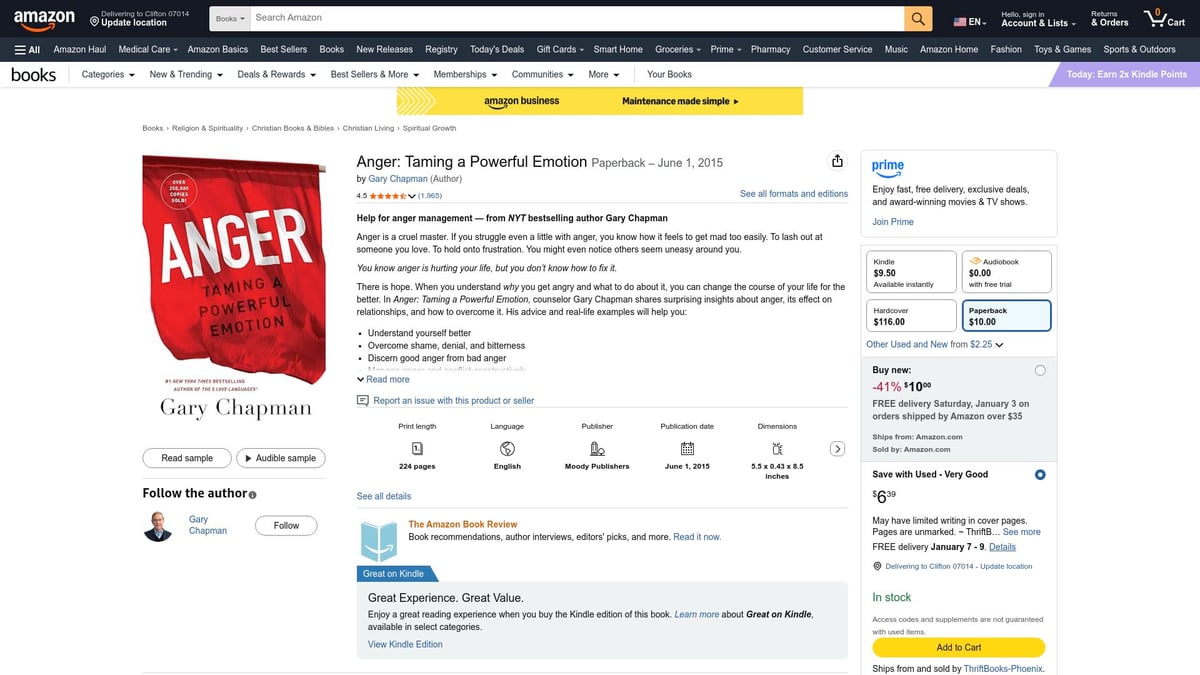
This book validates the experience of anger and guides readers through understanding, processing, and ultimately releasing it. Chapman’s approach combines forgiveness and emotional intelligence, making it especially useful for those struggling with long-term or repressed anger. The inclusion of real-life examples helps readers see themselves in the stories, encouraging reflection and action.
Key benefits include clear frameworks for managing anger in relationships and personal contexts. The book is particularly beneficial for adults seeking personal growth or improved relationships, and for faith-based audiences. While its religious orientation may not suit every reader, its practical advice and relatable scenarios make it a standout among books on anger.
Pros: Compassionate, easy to follow, real-life examples
Cons: Some content leans toward religious perspectives
The Dance of Anger: A Woman’s Guide to Changing the Patterns of Intimate Relationships by Harriet Lerner
"The Dance of Anger" by Harriet Lerner is a groundbreaking title in the world of books on anger, especially for women navigating relational challenges. At approximately $14.99, this book tackles the societal stereotypes and expectations that often shape women’s responses to anger.
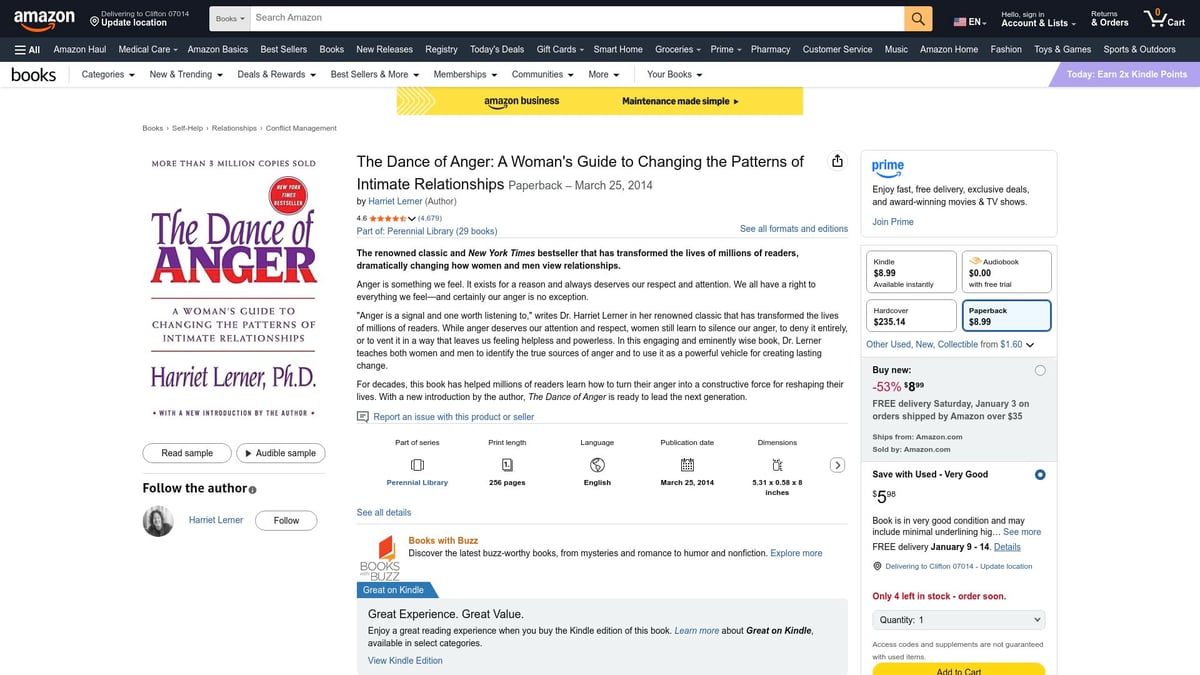
Lerner’s psychoanalytic insights and feminist perspective empower women to use anger constructively. The book teaches readers how to communicate assertively, set boundaries, and transform anger from a destructive force into a catalyst for positive change. Real-life scenarios and actionable advice help women recognize unhelpful patterns and replace them with healthier strategies.
This book on anger is ideal for women who feel unheard or invalidated in personal relationships, as well as for couples seeking to break negative cycles. While its focus is primarily on female experiences, the principles can be valuable for anyone interested in relationship dynamics.
Pros: Empowering, practical communication techniques, relatable stories
Cons: Geared mainly toward women; less universal for men or broader audiences
How to Keep People from Pushing Your Buttons by Albert Ellis
Albert Ellis’s "How to Keep People from Pushing Your Buttons" is one of the most respected books on anger for those seeking evidence-based strategies rooted in Rational-Emotive Behavior Therapy (REBT). Priced at $15.99, this title helps readers identify irrational thoughts and reframe their emotional responses.
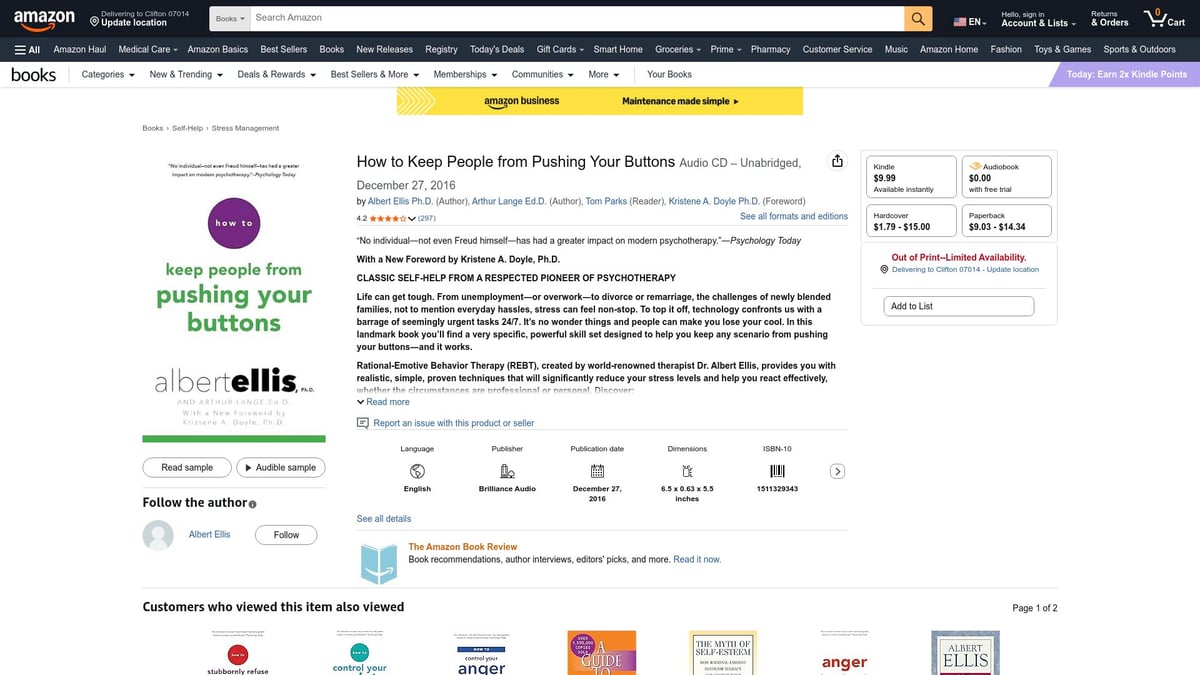
Ellis, a pioneer in psychology, equips readers with practical tools to manage triggers in the workplace, family, and social settings. Instead of simply suppressing anger, the book guides individuals through understanding the root causes and developing healthier coping mechanisms. Its clear, actionable methods can be applied to a wide range of everyday situations.
Key features include step-by-step exercises, real-world examples, and techniques for emotional regulation. While some readers may find the text slightly theoretical, the focus on practical change makes it a must-read among books on anger. This book is especially helpful for adults who often feel provoked or overwhelmed by others’ behavior.
Pros: Evidence-based, practical, applicable to various settings
Cons: May be dense for those seeking purely hands-on activities
Anger Management Workbook for Kids: 50 Fun Activities to Help Children Stay Calm and Make Better Choices When They Feel Mad by Samantha Snowden
Among books on anger for children, Samantha Snowden’s "Anger Management Workbook for Kids" stands out for its accessible language and engaging activities. At $10.99, this workbook targets children aged 6 to 12, offering 50 interactive exercises to help them recognize, express, and manage anger.
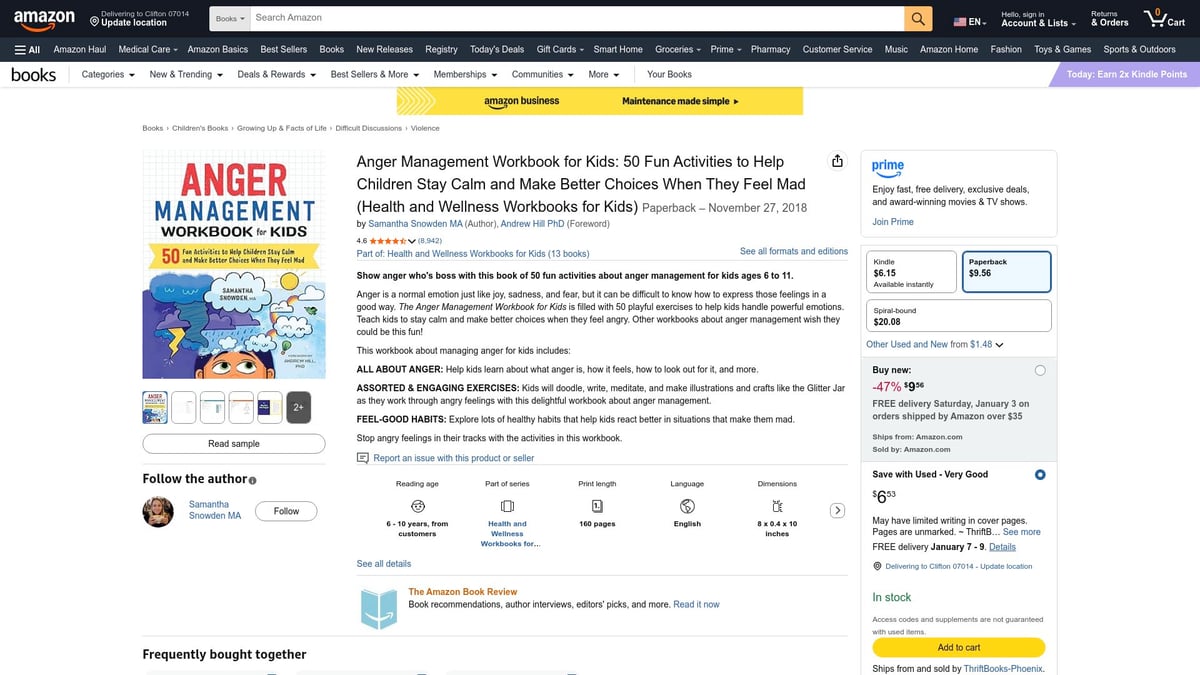
The book introduces mindfulness, self-regulation, and empathy in a fun, age-appropriate way. Activities are designed to be completed with a parent, teacher, or therapist, making the learning process collaborative. Children gain practical tools for naming their emotions, understanding triggers, and making thoughtful choices when they feel mad.
This workbook is an essential resource for parents, educators, and mental health professionals working with younger audiences. While it is not suitable for older teens or adults, its focus on building lifelong emotional skills makes it invaluable among books on anger for kids.
Pros: Child-friendly, fun, builds foundational skills
Cons: Limited to elementary-aged children
How to Stop Losing Your Sh*t with Your Kids: A Practical Guide to Becoming a Calmer, Happier Parent by Carla Naumburg
Carla Naumburg’s "How to Stop Losing Your Sh*t with Your Kids" is a standout among books on anger for parents who feel overwhelmed by daily stress. Priced at $16.95, this guide combines humor with research-backed strategies, making it both relatable and actionable.
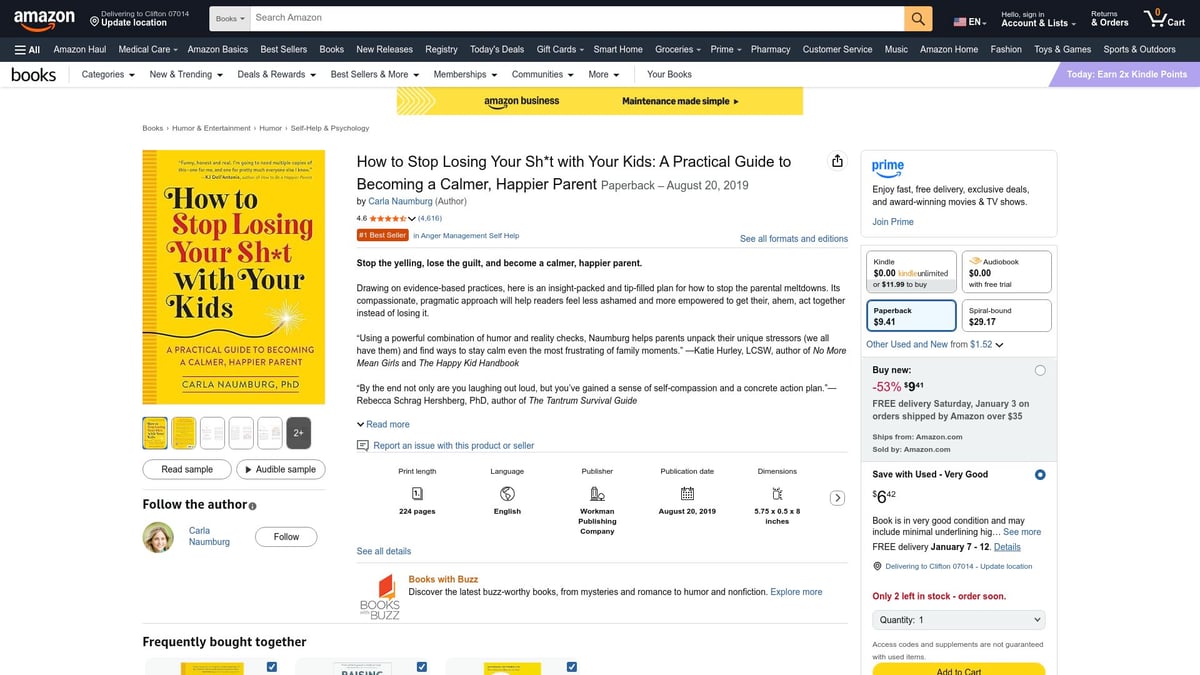
Naumburg acknowledges the real frustrations parents face and provides step-by-step advice for self-regulation and self-compassion. The book’s tone is empathetic and nonjudgmental, encouraging parents to forgive themselves and adopt healthier patterns. Each chapter includes practical tips, reflection prompts, and real-life examples, making it easy to apply the concepts in everyday parenting.
This book is particularly helpful for parents of children of all ages who want to break the cycle of yelling and reactive behavior. While its focus is on parenting scenarios, the insights can also benefit anyone looking to improve emotional regulation at home. For those seeking additional resources, the Mindset Books Collection offers further options for emotional growth and resilience.
Pros: Humorous, practical, supportive
Cons: Exclusively centered on parenting situations
The Anger Trap: Free Yourself from the Frustrations that Sabotage Your Life by Les Carter and Frank Minirth
"The Anger Trap" by Les Carter and Frank Minirth is a powerful choice among books on anger for adults facing recurring frustration. At $14.99, this book uncovers subtle anger patterns and the cycles that keep individuals feeling stuck.
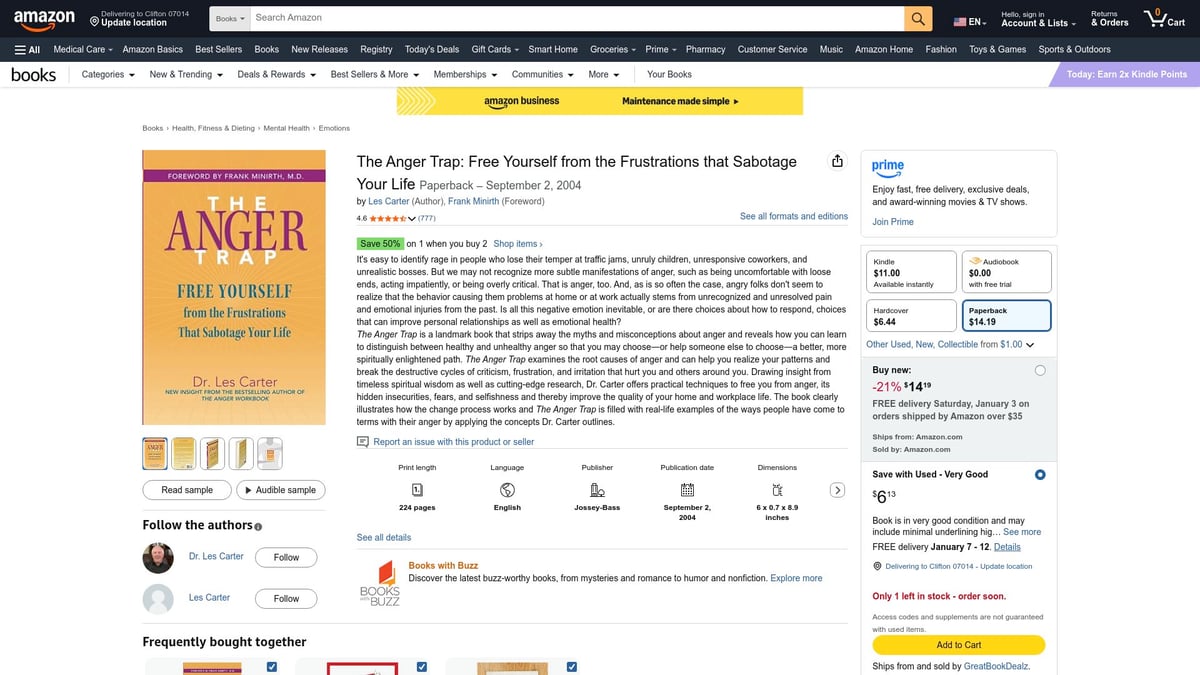
Carter and Minirth, both experienced mental health professionals, guide readers through identifying their unique anger responses. The book offers strategies for breaking negative cycles, setting boundaries, and managing stress. Through reflective exercises and practical solutions, readers learn to address the underlying causes of their anger, not just the symptoms.
This title is suitable for anyone who finds anger affecting multiple areas of life, from work to family. While it is less focused on specific relationships, it provides a broad framework for personal growth. Its emphasis on self-reflection and actionable steps makes it a valuable addition to any collection of books on anger.
Pros: Insightful, practical, addresses root causes
Cons: Less targeted to couples or parents
Peaceful Parent, Happy Kids: How to Stop Yelling and Start Connecting by Laura Markham
"Peaceful Parent, Happy Kids" by Laura Markham is recognized as one of the most influential books on anger for parents seeking a relationship-based approach. With a price of $17.00, the book integrates neuroscience and practical parenting strategies to foster emotional connection.
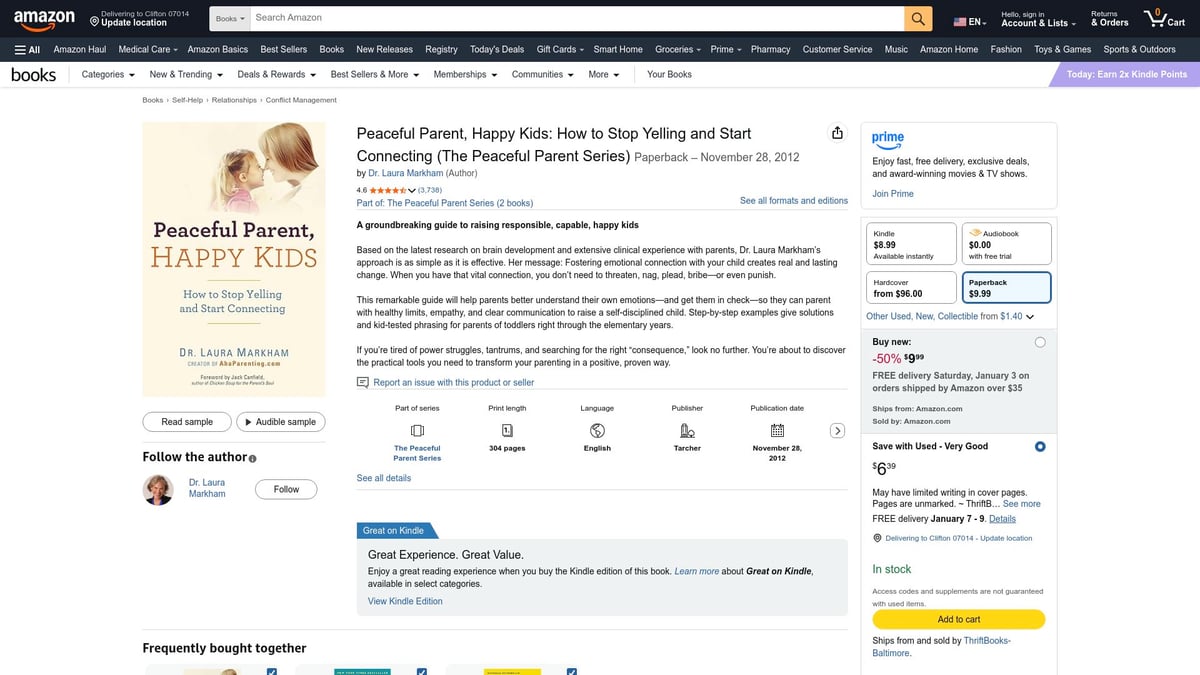
Markham’s focus on empathy, positive discipline, and self-regulation empowers parents to manage both their own and their child’s anger. The book provides actionable steps for building trust, improving communication, and breaking the cycle of yelling. Real-world examples and research-backed advice make it accessible and relevant for modern families.
While adopting these new approaches may require commitment, the long-term benefits for both parent and child are substantial. This book’s holistic perspective and focus on emotional intelligence secure its place among the top books on anger for families.
Pros: Research-based, holistic, supports parent and child
Cons: Requires dedication to new methods
Today I Am Mad by Michael Gordon
For the youngest readers, "Today I Am Mad" by Michael Gordon is a gentle introduction to books on anger. At $11.99, this illustrated storybook is designed for children ages 3 to 5, teaching them to understand and manage their feelings through relatable characters.
The story follows a young child as they experience anger and learn coping skills, modeling healthy emotional responses. Simple language and engaging illustrations make the book easy for young kids to grasp, while discussion prompts encourage parents and teachers to explore emotions together.
This book is most effective when used as a conversation starter in preschool or at home. While it is not a workbook, its narrative approach helps children build empathy and self-regulation from an early age. "Today I Am Mad" is a must-have among books on anger for preschoolers.
Pros: Relatable, easy to understand, encourages discussion
Cons: Best for very young children; not interactive
Anger Management Books for Special Audiences
Navigating anger is not a one size fits all journey. Different groups face unique challenges, so finding books on anger tailored to your situation can be transformative. Whether you are part of a couple, a parent, or supporting a child or teen, there are resources designed with your needs in mind. The following recommendations highlight specialized books and practical tools for every audience.
Books for Couples and Relationships
For couples, the right books on anger can shift the dynamic from conflict to collaboration. Many relationship focused anger management books offer:
- Communication frameworks to address common triggers like finances and intimacy
- Activities for joint reflection and growth, such as journaling or role play
- Strategies for assertive communication and empathy building
Titles like "Love More, Fight Less" by Gina Senarighi provide actionable exercises that help couples transform arguments into opportunities for deeper understanding. Workbooks often include step by step activities so both partners can engage and apply new skills together. These books on anger encourage couples to view disagreements as a chance to strengthen their partnership, not as a sign of failure.
Books for Parents and Families
Parents often juggle their own emotions while guiding their children’s behavior. Books on anger for parents and families focus on:
- Techniques for self regulation and meeting personal needs
- Building support systems to prevent burnout
- Positive parenting strategies that foster connection and empathy
Resources like "Anger Management for Parents" by Henry Hal offer communication tips and guidance for breaking negative cycles. Many books include self compassion exercises and reflection prompts to help parents stay grounded. For hands on support, families can benefit from tools like the Emotional Reset Kit, which provides practical strategies for managing intense emotions at home.
Books for Children and Teens
Helping children and teens understand and express anger safely is crucial. Books on anger for younger audiences use:
- Simple stories and relatable characters to teach emotional regulation
- Engaging activities that build self awareness and empathy
- Age appropriate language for different developmental stages
Storybooks such as "Today I Am Mad" help preschoolers identify their feelings and learn healthy coping skills. For older kids and teens, interactive workbooks offer exercises that promote self reflection and responsible choices. To further support adolescents, explore resources like Managing Teen Emotions and Mental Health, which provides additional tools for emotional regulation and growth. These specialized books on anger ensure young readers gain lifelong skills for managing difficult emotions.
The Science Behind Anger Management Strategies in Books
Understanding the effectiveness of books on anger starts with their scientific foundation. These resources draw from decades of psychological research, ensuring readers access proven strategies for lasting change. By exploring therapies like CBT, DBT, and mindfulness, books on anger translate complex science into practical steps anyone can apply.
Cognitive Behavioral Therapy (CBT) and Dialectical Behavior Therapy (DBT) are foundational techniques featured in many top books on anger. CBT helps readers notice and challenge the irrational thoughts that often fuel anger, replacing them with healthier perspectives. DBT, on the other hand, offers skills in emotional regulation, distress tolerance, and interpersonal effectiveness. When books on anger present these evidence-based frameworks, they empower readers to break the cycle of reactive outbursts.
Mindfulness is another core strategy woven throughout modern anger management literature. By teaching readers to observe their emotions without judgment, mindfulness reduces the physiological arousal that accompanies anger. This practice increases self-awareness and helps individuals pause before reacting. Recent research highlights how mindfulness practices can help manage anger and reduce aggressive behavior, making it a vital component in many recommended books on anger.
Neuroscience backs the effectiveness of these approaches, showing that regular use of mindfulness, CBT, and DBT can reshape brain pathways related to emotion control. Books on anger often translate this complex science into simple exercises, making transformative change accessible to everyone.
Importantly, books on anger extend beyond theory by providing ongoing support. For those unable or unwilling to seek therapy, these resources offer a lifeline—normalizing anger, reducing shame, and encouraging daily practice. Real-life case studies and testimonials are often included, showing measurable gains in anger management and relationship satisfaction. For example, studies examining the impact of anger management programs on adolescents demonstrate significant improvements in emotional regulation and coping skills, as seen in this study of program effectiveness in adolescents.
By grounding advice in science and real-world results, the best books on anger guide readers toward healthier, more fulfilling lives.
If you’re ready to put these life-changing anger management strategies into practice, remember that real growth comes from taking action and building new habits. The books we’ve explored offer powerful tools, but ongoing support can make all the difference—especially for teens navigating tough emotions. At Emmadavisbooks.com, you’ll find resources designed for exactly this purpose: guiding teens to manage anger, boost confidence, and handle life’s challenges with resilience. If you want even more practical tools to support healthy emotional development, you can Start the Growth Pack and help your teen build a foundation for lifelong well-being.